
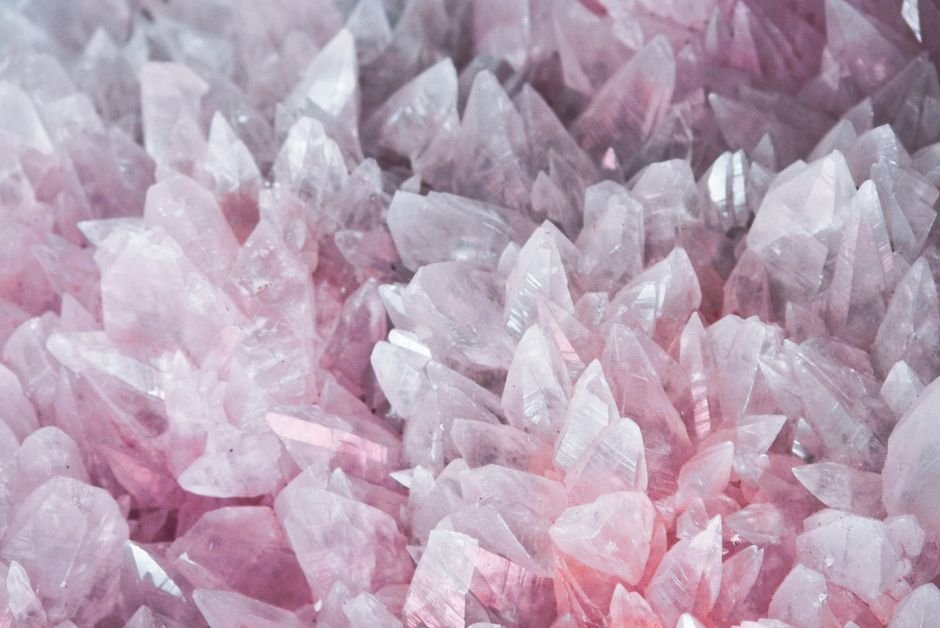
In the fake vs natural rose quartz comparison, the clearest tell is clarity: natural rose quartz is typically cloudy or milky with visible internal inclusions, while fakes — usually dyed glass or resin — tend to be unnaturally uniform in color, unusually clear, or show tiny round bubbles trapped inside. Genuine rose quartz almost never looks glass-clear, so counterintuitively, a “flawless” specimen is often the biggest red flag.
This guide walks through every reliable way to tell real rose quartz from fake, what actually causes its natural pink color, the myths that trip up even careful buyers, and a clear checklist to run through before you purchase.
The 6 Proven Ways to Spot Fake vs Natural Rose Quartz
- Clarity and cloudiness — natural stones are milky/hazy; fakes are often suspiciously clear
- Air bubbles — perfectly round bubbles under a loupe or magnifying glass mean glass, always
- Hardness (scratch test) — real rose quartz (Mohs 7) scratches glass; glass imitations don’t scratch it back
- Color intensity — natural color is soft and muted; dyed material tends to look unnaturally vivid or “hot” pink
- Weight and temperature — genuine quartz is denser and feels cooler to the touch for longer than glass or plastic
- Color distribution — natural color runs evenly through the whole stone; dyed color often pools along cracks or sits only on the surface
Each of these is explained below, along with which tests are genuinely reliable and which ones are overstated by belief-driven sources.
Why Fake Rose Quartz Is So Common
Rose quartz’s popularity is exactly what makes it worth faking. Its soft, wearable pink color and relatively low price for genuine material create a large market — and a large incentive to cut corners with dyed glass or resin, which are cheap to produce and easy to color-match. Because rose quartz is one of the more affordable natural gemstones, buyers often assume price alone signals authenticity; it doesn’t. Very cheap material can still be genuine, and expensive pieces can still be mislabeled, so visual and physical tests matter more than price. (Amethyst has the same popularity problem — see how to spot fake amethyst.)
What Actually Makes Rose Quartz’s Color Real
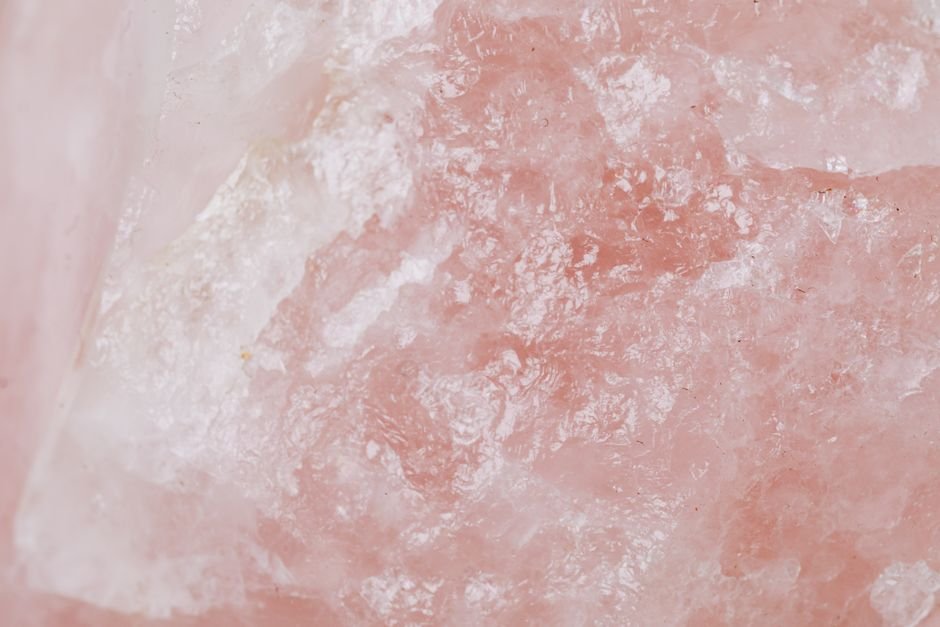
Here’s the science, and it’s more specific than most guides get: natural rose quartz doesn’t get its pink color from a single trace element the way amethyst gets its purple from iron. According to GIA’s rose quartz description, research has traced the color to microscopic inclusions of aligned silicate mineral fibers, closely related to but not identical to the mineral dumortierite — these fibers crystallized as the gem cooled and are oriented along the quartz’s internal crystal directions. That same GIA overview of rose quartz confirms it has a Mohs hardness of 7 and typically ranges from very light pink to medium-dark pink, with translucent, cloudy character coming directly from those inclusions.
This matters for spotting fakes because it explains why the cloudiness test works: the inclusions that cause the color are also what cause the haze. A perfectly transparent, glass-clear “rose quartz” is missing the very structure that makes the stone pink in the first place — which is a strong sign you’re looking at dyed glass instead.
How to Run Each Test (Step-by-Step)
- Check for cloudiness first. Hold the stone up to light. Genuine rose quartz should show some internal haze, wispy inclusions, or fine internal lines — even polished pieces. If it’s crystal clear like window glass, be suspicious.
- Look for bubbles with a loupe or magnifying glass. Round, perfectly spherical bubbles form during glass-melting, not mineral crystallization — real quartz never has them. (The full test toolkit for any stone is in how to tell if a crystal is real.)
- Try the scratch test carefully, on an inconspicuous spot. Rose quartz (Mohs 7) can scratch ordinary glass (roughly Mohs 5.5). If your stone can’t scratch glass, or if glass scratches it, it likely isn’t quartz.
- Compare color intensity to known genuine examples. Natural color is a soft, muted pastel. Bright, saturated, or “neon” pink is a strong sign of dye.
- Feel the temperature. Press the stone to your cheek or lip — quartz conducts heat differently than plastic and should feel noticeably cool, warming up slowly. Plastic and resin warm almost immediately.
- Check where the color sits. Natural color is distributed evenly throughout the stone. If color is concentrated in cracks (a spiderweb pattern) or only on the surface — scratch a hidden spot and look for a different color underneath — that indicates dyeing or coating.
Common Myths About Fake vs Natural Rose Quartz
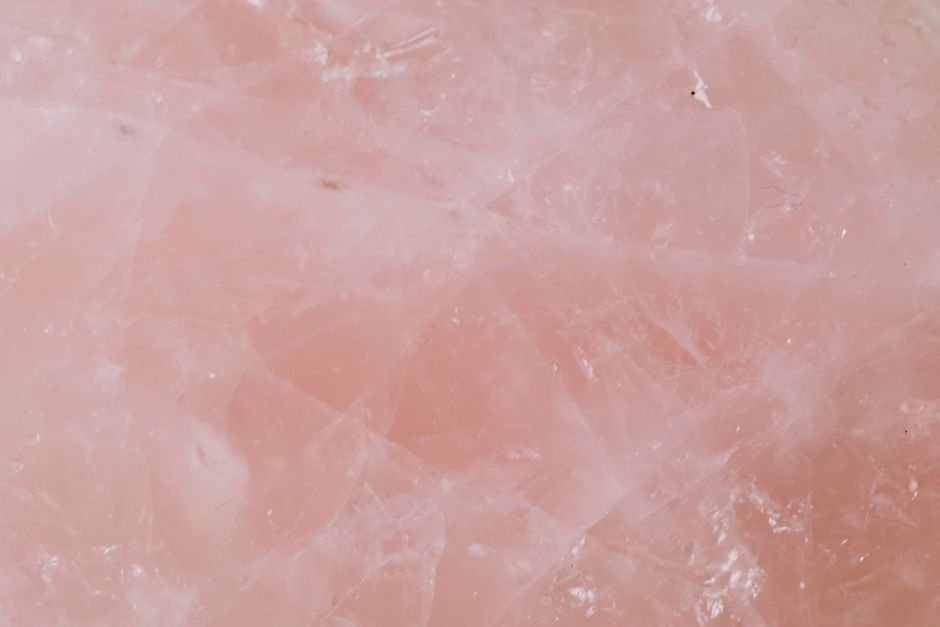
- Myth: All pale pink quartz is automatically fake. This is backwards. Pale, almost-white pink is actually typical of natural rose quartz, especially in smaller pieces — GIA notes that color ranges from very light pink to medium-dark, and the most saturated color tends to occur only in larger specimens.
- Myth: Clarity equals authenticity. The opposite is generally true for this specific stone. Genuine rose quartz is usually cloudy or milky because of the inclusions that create its color; unusually clear “rose quartz” is more often glass or a different treated material.
- Myth: A single test is enough. Any one test can occasionally mislead (heat-treated genuine rose quartz can look unusually vivid, for instance). Running two or three tests together — clarity, hardness, and temperature — is far more reliable than relying on any single check.
When This Doesn’t Apply: Buying Decorative Glass on Purpose
None of this matters if you’re simply buying decorative pink glass and you know it. This framework doesn’t apply when the buyer is happy with decorative dyed glass that’s honestly disclosed as such by the seller. Dyed glass or resin “rose quartz” isn’t inherently a problem — plenty of people buy it intentionally for its color and low cost. The issue is only when it’s sold or represented as genuine natural rose quartz without disclosure.
FAQs
Why is my rose quartz see-through?
If your piece is genuinely transparent rather than translucent, it’s either high-quality faceted natural rose quartz (rare, and typically only in the finest, most transparent rough) or, far more commonly, glass. According to GIA, transparent rose quartz material is usually faceted specifically because that clarity is uncommon enough to be worth showcasing — most natural rose quartz is translucent and cloudy, not clear. If your piece is very inexpensive and glass-clear, glass is the more likely explanation.
Does dyed rose quartz have any use?
Yes. As long as it’s honestly sold as dyed glass or treated material rather than misrepresented as natural, there’s nothing wrong with using it decoratively, in jewelry, or in a personal practice — the belief-based value people place on a stone doesn’t require it to be untreated, just as it doesn’t require any of these claims to be scientifically verified in the first place.
Can heat-treated rose quartz still be considered “real”?
Yes, with a caveat. A stone that’s natural quartz but has been heated or otherwise enhanced to intensify its color isn’t a fake in the same sense as glass or resin — it’s still the genuine mineral, just treated. Reputable sellers should disclose this kind of treatment, since it affects value even though the material itself is authentic. (The same natural-vs-treated distinction is unpacked in is heat-treated citrine worth buying.)
Is there a foolproof single test for identifying real rose quartz?
No single test is completely foolproof on its own. The scratch test is one of the most reliable (glass can’t be scratched by anything softer than itself), but combining it with the clarity check and the bubble check gives you much higher confidence than any one test alone.
Should I ask for certification when buying expensive rose quartz?
For higher-value pieces, yes. A GIA Colored Stone Identification Report can confirm whether a stone is natural or lab-grown and disclose any detectable treatments, which is the most reliable verification available for a significant purchase — though it’s generally unnecessary for everyday tumbled stones or inexpensive jewelry.
Key Takeaways
- In the fake vs natural rose quartz comparison, cloudiness is your best first clue — genuine stones are typically hazy or milky, not glass-clear, because of the same microscopic inclusions that give them their color.
- Round air bubbles, an inability to scratch glass, and unnaturally vivid or unevenly distributed color are all reliable signs of a fake.
- No single test is completely conclusive on its own — combine at least two or three for real confidence.
- If you’re knowingly buying disclosed decorative glass, none of this matters — the concern is only misrepresentation, not the material itself.
Leave a Reply