Last Updated on August 19, 2026 by Umar Farooq
Short answer: Yes, you can still use a broken crystal. Breaking doesn’t remove its aesthetic or spiritual use value — the mineral itself hasn’t changed, only its shape has. The one real limit is safety: if the pieces have sharp edges, are too small to handle, or are too fragile to hold their form, that’s when it’s time to repurpose them differently or set them aside rather than keep using them as-is.
Can You Still Use a Broken Crystal? The Direct Answer
So, can you still use a broken crystal? In almost every case, yes. A break changes a crystal’s shape, not its mineral composition, so any physical or spiritual quality it had before still exists in each piece afterward. The main things to check before continuing to use it:
- Are there sharp edges or shard points that could cut you?
- Is the piece still large enough to hold, wear, or display safely?
- Does the crack look stable, or is it likely to keep spreading? (Our guide on why did my crystal crack by itself shows how to monitor a crack over time.)
If the answers are “no sharp edges,” “yes, still a usable size,” and “stable,” you’re fine to keep using it exactly as you were before.
Why People Worry About Using a Broken Crystal
A few concerns come up again and again when a crystal breaks:
- “Did the energy leave?” People who work with crystals for meditation, grids, or intention-setting often worry that breaking releases or destroys whatever the stone was “holding.”
- Safety. A visibly sharp edge is a legitimate, practical reason to hesitate — this one isn’t about energy at all.
- Aesthetic disappointment. A crystal bought for its shape, size, or display value understandably feels less special once it’s in pieces, separate from any spiritual question.
Each of these deserves a straight answer, which is what the rest of this guide gives you.
What Science Says: The Mineral Itself Hasn’t Changed
Breaking a crystal is what’s known as a physical change, not a chemical one. A physical change alters an object’s shape, size, or form without changing what it’s actually made of — melting ice, cutting paper, and shattering glass all fall into this category. As one chemistry reference puts it, the difference between a physical and chemical change comes down to composition — a physical change alters appearance or form, while a chemical change alters what the substance is actually made of. A cracked quartz point is still 100% quartz; a rose quartz sphere broken into five pieces is still rose quartz in every one of those five pieces. Nothing about the mineral’s structure, hardness, or composition is different after the break — only its outer shape is.
This matters because it means any physical property the crystal had (color, hardness, clarity, luster) is fully intact in each fragment. What you’re deciding when you ask “can I still use this” isn’t really a question about the stone’s properties — it’s a question about size, shape, and safety.
The Spiritual View: Broken Doesn’t Mean Depleted
It’s worth being upfront that this next part is belief, not something verified by any scientific method. Many crystal practitioners hold that breaking doesn’t diminish a stone’s energy at all — some traditions describe a broken crystal as having released built-up energy and becoming, in their view, even more “activated” afterward. Others see the break as marking the end of one chapter of use and the start of another, with each new piece carrying its own connection going forward.
You don’t have to choose between the physical explanation and a personal or spiritual one — they aren’t in competition. The mineral composition is unquestionably unchanged; whether you also find meaning in when or how it broke is entirely a matter of personal practice, not something this guide can settle for you.
Common Myths About Broken Crystals — Busted
Myth: A broken crystal is worthless.
Value here depends entirely on what you use it for. For display purposes, a broken piece may lose some showcase appeal — but for jewelry-making, altar work, grids, or gifting, smaller broken pieces are often just as functional as the original whole stone, and sometimes more versatile.
Myth: Every break is a bad omen.
There’s no verified evidence connecting a crystal breaking to bad luck. Most breaks trace back to a straightforward physical cause — an impact, a temperature swing, or a flaw the stone already had — rather than any kind of warning sign.
How to Safely Handle a Broken Crystal
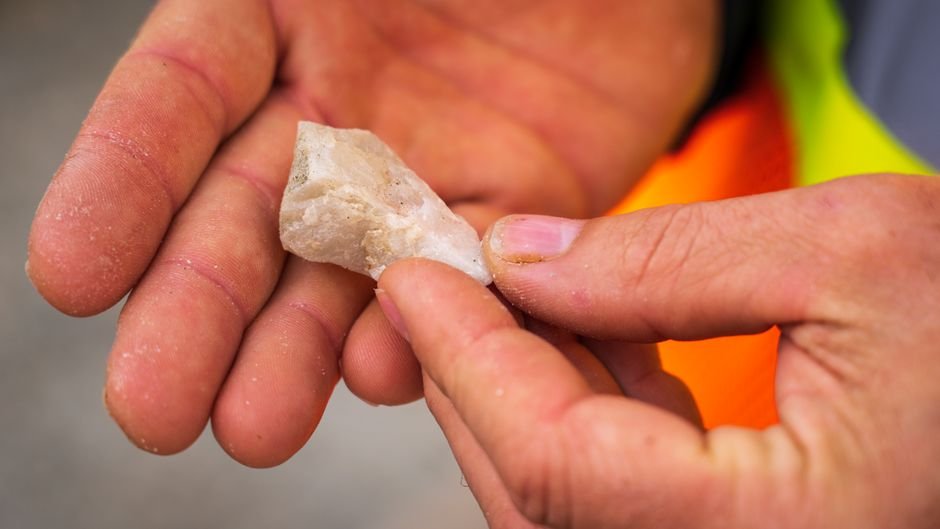
This is the part most crystal guides skip, and it’s the part that actually matters for your safety. Before you pick up any broken piece:
- Check every edge with your fingertip, lightly, before gripping it. Run a finger gently along the break line rather than grabbing the piece — this lets you find a sharp point before your palm does.
- Use a cloth or gloves for the first handling if the crack looks fresh or jagged, the same way you’d treat a piece of broken glass or ceramic. According to safety guidance on handling broken glass and mineral shards, cut-resistant gloves and careful, deliberate handling — rather than bare-handed grabbing — meaningfully reduce the risk of cuts from sharp fragments.
- Sweep up small chips and dust with a brush, not your hands, especially with softer or more brittle minerals that can shed tiny slivers.
- Store sharp pieces separately in a small box or pouch until you decide how you’ll repurpose them, so they don’t cut you (or someone else) while rummaging through a drawer later.
- If a piece is jewelry with a broken setting, don’t wear it again until you’ve either had a jeweler check the mount or resecured the stone yourself — a cracked stone in a loose setting is far more likely to fall out or crack further.
Doesn’t Apply When: Shards Are Unsafe or Too Small to Use
There’s a real limit here. If a crystal has shattered into slivers too small or too sharp to safely hold, wear, or store, it’s no longer a “keep using it as-is” situation. In that case, your options shift from repurposing to safe disposal (covered below) — and that’s a completely reasonable outcome, not a failure on your part.
What to Do With a Broken Crystal: 5 Repurposing Options
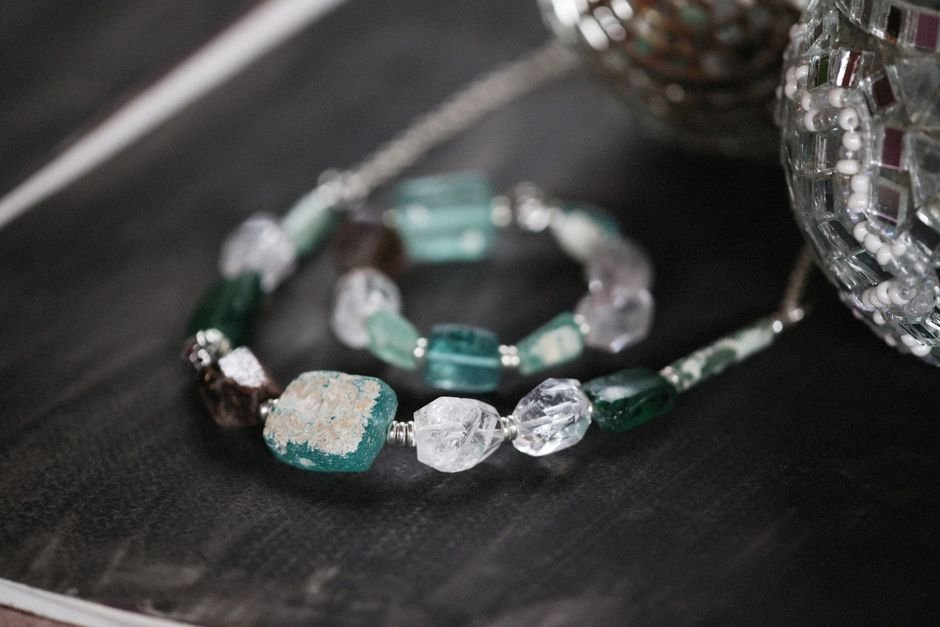
- Jewelry. Small, stable pieces can be wire-wrapped, set in a pendant, or — for pieces large enough — sent to a lapidary to be shaped into a cabochon or simple polished form. Gem cutters routinely work with fractured or irregular rough material, shaping stones around existing flaws rather than around a perfect, whole piece.
- Altar or display piece. A cluster of broken fragments arranged together, or a single flat-faced piece set on its cleaved surface, can work as well as — or better than — the original whole stone for a home altar or shelf display.
- Crystal grid or garden. Smaller broken pieces are genuinely well suited to grids, potted plants, or garden borders, where size and shape matter less than they would in a single display piece.
- Gift the pieces. If you have several fragments, giving individual pieces to friends or family is a low-effort way to keep using a crystal you’re attached to without needing every piece to look pristine.
- Safe disposal. If the pieces are unsafe to keep (see above) or you no longer want them, wrap them securely and dispose of them the way you would any broken glass or ceramic — or, if you prefer, return them to soil outdoors (see should I bury a broken crystal for how to do that properly).
Should I Glue a Broken Crystal?
You can, if it broke into a few large, well-matched pieces and you’d rather display it whole than in parts. Use a strong adhesive rated for stone (not hot glue, which can crack some minerals from heat). Just know two things going in: gluing is cosmetic, not structural — a glued crystal is measurably weaker at that seam than it was before — and it won’t hold up to being worn, handled roughly, or displayed somewhere it could be bumped. For adhesive choices and when repair is worth it, see can broken crystals be repaired.
Real Example: A Broken Rose Quartz Sphere, Repurposed
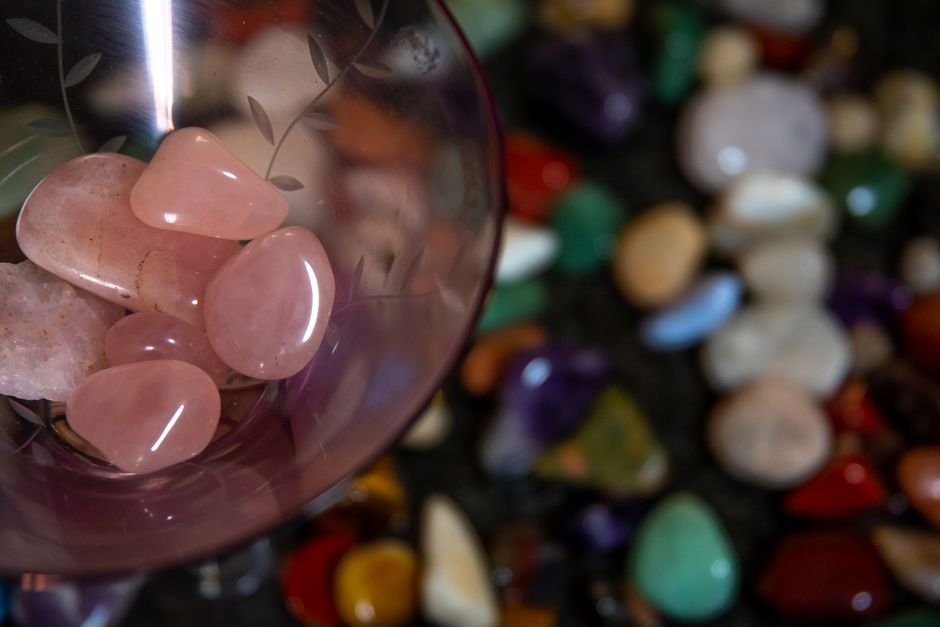
A rose quartz sphere, dropped once on a hardwood floor, cracks into five uneven pieces. Rather than discard it, the largest three pieces are sent to a lapidary and shaped into simple polished cabochons, later set into pendants and earrings. The two smallest fragments go into a windowsill crystal grid. Nothing about the rose quartz itself changed in the process — the sphere became five smaller, still-usable pieces instead of one larger one.
Questions About Using a Broken Crystal
Should I throw away a broken crystal?
Only if the pieces are unsafe to handle (too sharp, too small, or too fragile to hold their shape) or you genuinely don’t want to keep them. Otherwise, most broken crystals are perfectly fine to repurpose into jewelry, display pieces, or grids.
Does a broken crystal need special cleansing?
Many people choose to cleanse a crystal after it breaks, the same way they would cleanse any crystal after a change in its use or condition — with sunlight, moonlight, sound, or smoke, according to whatever method they normally use. There’s no evidence this is scientifically necessary, but if it’s part of your practice, there’s no reason to skip it.
Is a broken crystal bad luck?
No — there’s no verified connection between a crystal breaking and bad luck. It’s a belief some people hold, not an established fact.
Can I still wear broken crystal jewelry?
Only after checking the setting and edges. If the stone is loose in its mount or has a sharp edge against your skin, have it repaired or reset before wearing it again.
Will a glued crystal work as well as before?
Physically, a glued crystal is weaker at the seam than an intact one, so avoid relying on it for anything load-bearing (like a ring). For display or personal use, most people find it works exactly as it did before.
Keep Using It, With One Safety Check
Can you still use a broken crystal? Yes — in the overwhelming majority of cases, the answer is a straightforward yes. Its composition is unchanged, and the only real limits are practical ones: sharp edges, unstable fragments, or pieces too small to handle safely. Once you’ve cleared those safety checks, whether you glue it, repurpose it into jewelry, gift it, or simply keep using it as it is now comes down entirely to your own preference.