Last Updated on August 19, 2026 by Umar Farooq
If you are holding a stone and deciding whether to put it on the windowsill, the short answer is: amethyst, fluorite, kunzite, celestite, rose quartz, smoky quartz, citrine, topaz, apatite, aquamarine and amazonite all fade, and some of them fade in days. Agate, jasper, obsidian, hematite, tiger’s eye and clear quartz are unbothered by it.
The reason is the same for almost every stone on the first list. Their colour comes from a colour centre — a tiny defect in the crystal lattice created by natural radiation over geological time. Ultraviolet light hands that defect enough energy to relax back to its ordinary state, and the colour goes with it. The fading is permanent at home, and it is cumulative: there is no recovery period between exposures.
What Crystals Cannot Go in the Sun: The Quick List
Scan for your stone. “How fast” assumes direct, unfiltered sun for several hours a day — behind glass or in indirect daylight, multiply the timescales.
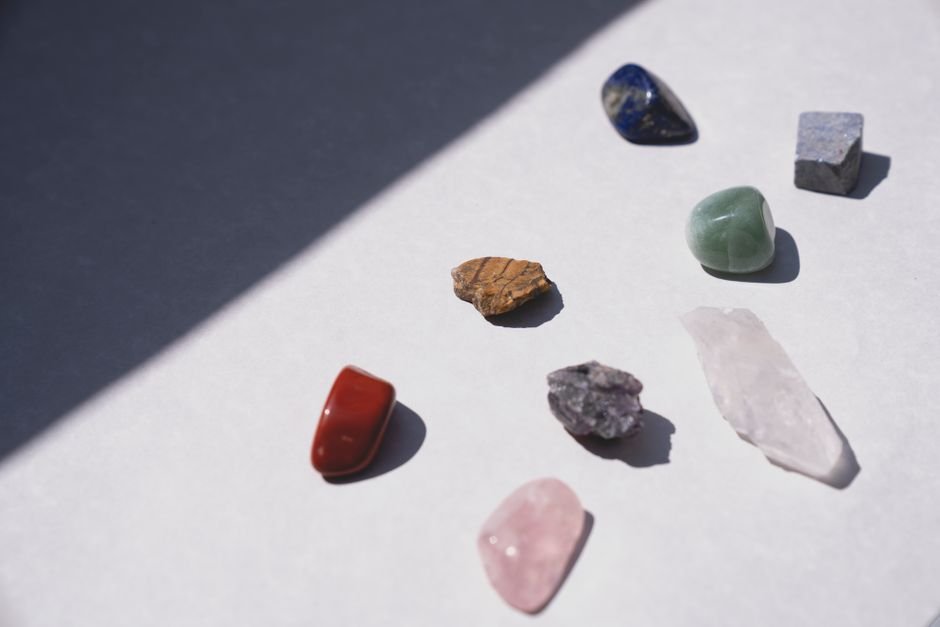
| Stone | Fades? | How fast | Safe alternative | |—|—|—|—| | Amethyst | Yes | Days to weeks | Moonlight; display clear quartz in the window instead | | Ametrine | Yes | Days to weeks | Same care as amethyst — dark storage | | Kunzite | Yes | Hours to days | Keep boxed; wear it in the evening | | Fluorite | Yes | Days to weeks | Closed cabinet; cleanse with sound | | Celestite | Yes | Weeks | Shaded shelf, never a window | | Smoky quartz | Yes | Weeks to months | Indirect light; charge on a quartz cluster | | Citrine | Yes | Weeks to months | Moonlight; put jasper in the sunny spot | | Topaz (brown, pink, irradiated blue) | Yes | Days to months | Jewellery box between wears | | Apatite | Yes | Weeks to months | Shaded display only | | Amazonite | Yes | Weeks to months | Interior shelf | | Aquamarine | Slowly | Months to years | Indirect daylight is fine | | Rose quartz | Slowly | Months | Moonlight or a selenite plate | | Green aventurine | Slowly | Months to years | Rotate it off the windowsill | | Lapis lazuli | Only if dyed | Weeks if dyed | Buy undyed; keep dyed pieces boxed | | Sodalite | Minimal | Years | Sun is acceptable | | Carnelian | Minimal | Years | Sun is acceptable | | Tiger’s eye | Minimal | Years | Sun is fine | | Clear quartz | No | — | Sun is fine, but see the fire warning below | | Agate | No (unless dyed) | — | Sun is fine | | Jasper | No | — | Sun is fine | | Obsidian | No | — | Sun is fine; it does get hot | | Hematite | No | — | Sun is fine; keep it dry | | Moonstone | No | — | Sun is fine | | Labradorite | No | — | Sun is fine | | Malachite | No | — | Heat and water are the risks, not light | | Selenite | No | — | Humidity is the risk | | Pyrite | No | — | Humidity is the risk | | Turquoise | Not really | — | Oils and heat are the risks | | Opal | No | — | Dry heat crazes it; light does not |
The Fast Faders and the One Thing They Share
Ten stones account for most of the fading people actually experience: amethyst, rose quartz, fluorite, kunzite, celestite, smoky quartz, citrine, topaz, apatite and aquamarine.
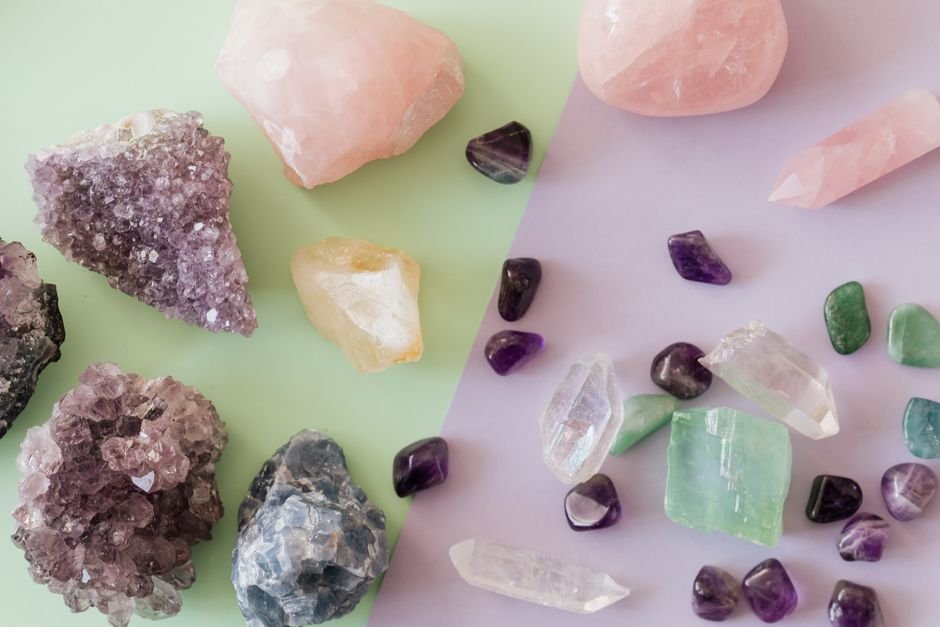
Amethyst is the clearest example, and the mechanism generalises. Amethyst is ordinary quartz with a trace of iron in the lattice, and on its own that iron does almost nothing. What creates the purple is natural radiation from the surrounding rock, acting over millions of years, knocking those Fe³⁺ atoms into an unstable higher-energy arrangement — a colour centre — that absorbs some wavelengths and reflects violet. UV light supplies exactly the energy needed to reset them. The purple does not wash off; it is switched off from the inside. Why is my amethyst turning white covers that process in full, including how to tell UV fading apart from the two things people confuse it with.
Smoky quartz works the same way with a different ingredient: aluminium substituting for silicon, activated by natural irradiation. Its brown-grey pales under UV and also under heat above roughly 200–300°C.
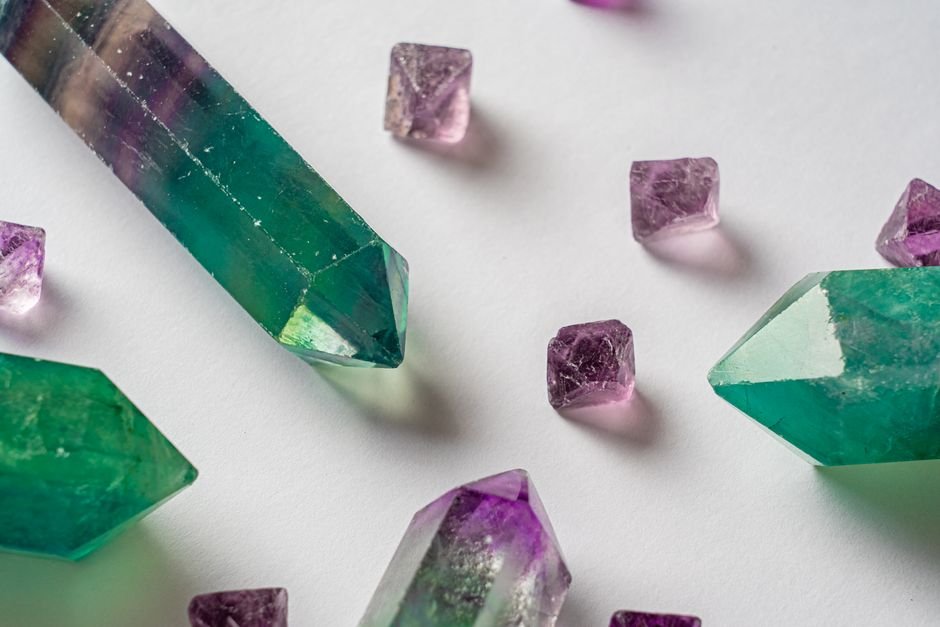
Fluorite owes most of its purple, green and blue banding to irradiation-produced defects, and it is one of the quickest to visibly change. Celestite’s soft blue bleaches toward white. Amazonite’s blue-green comes from lead-related colour centres in microcline feldspar and behaves the same way.
Kunzite is the extreme case. It is spodumene coloured by manganese, and it fades so readily that the trade nickname for it is the evening stone — the advice has always been to wear it after dark.
Topaz depends on the colour: brown and pink topaz fade quickly, irradiated blue topaz far more slowly. Apatite’s neon blue-greens are notoriously unstable, and aquamarine drifts over years rather than weeks. Citrine — most of which is heat-treated amethyst — pales in months.
Rose quartz is the exception worth understanding. Massive rose quartz gets its pink from microscopic mineral fibres rather than a pure colour centre, so it holds up better than amethyst — though rose quartz turning white is rarely only about light. It still pales over months of direct sun. Transparent pink quartz, the rarer crystalline material, fades quickly. If yours has gone milky white rather than pale pink, rule out dyed material first — fake vs natural rose quartz covers the tells.
Stones Daylight Barely Touches
What crystals can go in the sun without consequence? Broadly, the ones whose colour comes from bulk chemistry or physical structure rather than a fragile lattice defect.
Clear quartz has no colour to lose. Agate and jasper are coloured by iron oxides distributed through the stone — stable pigments, not switchable defects. Obsidian is volcanic glass coloured by fine mineral particles. Hematite is iron oxide itself. Tiger’s eye gets its shimmer from the fibrous structure left behind when crocidolite altered to quartz, and that structure does not care about UV.
Two caveats. Dyed agate is not stable — the bright teal and hot-pink slices sold cheaply are dyed, and the dye fades from the surface inward in a way that looks nothing like natural fading. And clear quartz spheres genuinely start fires. A polished sphere on a sunny sill is a lens, and scorched sills and curtains are a documented cause of house fires. Keep spheres in shade or in a box.
Where Sunlight Isn’t the Real Danger
Some of the most commonly damaged stones in a collection are not light-sensitive at all, which is why people keep losing them — they protect against the wrong thing.
Selenite is gypsum, CaSO₄·2H₂O, and it sits at 2 on the Mohs scale. Sunlight does nothing to it. Humidity does everything: damp air dulls the satin sheen, then makes the surface chalky, then makes it flake along the fibres. Bathrooms and kitchen windowsills destroy selenite far faster than sun ever could.
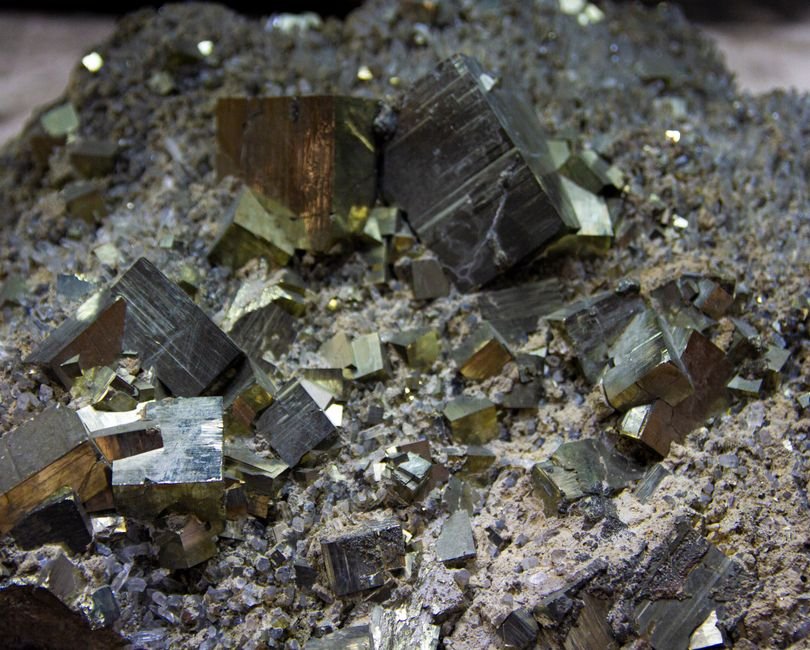
Pyrite is iron sulfide, FeS₂. In humid air the sulfide slowly oxidises, producing sulfuric acid and iron sulfates — collectors call it pyrite disease. It shows up as a whitish or rusty powder and a sour smell, and above roughly 60% relative humidity it accelerates sharply. A dry, sunny shelf is one of the better places for pyrite.
Turquoise is a porous hydrated copper aluminium phosphate. Its enemies are oils, lotions, perfume and heat, all of which shift it from sky blue toward green — hand cream is the usual culprit, not the window. Sustained heat also drives out its bound water, which changes the colour permanently.
How Long Is Too Long in the Sun?
There is no safe duration, because the damage is cumulative and one-directional. This is the part most guidance gets wrong.
Ten minutes a day for a year is not meaningfully different from one sixty-hour session. Every photon that resets a colour centre resets it for good. The stone does not rest, recover or re-darken in the dark — it simply stops changing.
So the practical thresholds look like this. Carrying a stone outside, photographing it in daylight, wearing it on a walk: not worth worrying about. A few hours of direct sun repeated weekly will visibly pale fluorite and amethyst inside a season. A full day outdoors is enough to start kunzite and bright apatite moving. Permanently living on a south-facing sill will take a deep amethyst to lilac in one to three months.
The corollary is reassuring: the moment you move a stone out of the light, the fading stops exactly where it is. A half-faded amethyst put in a drawer today stays at half-faded.
Why Sun Charging Became Standard Advice
If sunlight damages so many popular stones, why does nearly every beginner guide recommend it?
Because it is old, intuitive advice that needs no equipment, no teacher and no explanation — and because it mostly worked. The stones most people owned before the current crystal boom were agates, jaspers, carnelian and clear quartz, and none of those fade.
What changed is the collection. Amethyst, fluorite, kunzite, celestite and apatite are now ordinary shelf stones, sold everywhere, and the inherited advice was never updated for them.
So if you have been sun-charging for years, you were following the guidance you were given, in good faith, and so was the person who gave it to you. The fix is small: keep the ritual, change the light source.
Does Window Glass Protect Crystals From Fading?
Not enough to matter. This is worth answering directly, because a lot of people treat an indoor windowsill as a compromise.
Ordinary window glass blocks most UVB — the shorter, more energetic band that causes sunburn. It passes a large proportion of UVA, the longer band, which makes up the great majority of the UV reaching the ground in the first place. UVA is entirely capable of resetting the colour centres in amethyst, fluorite and kunzite.
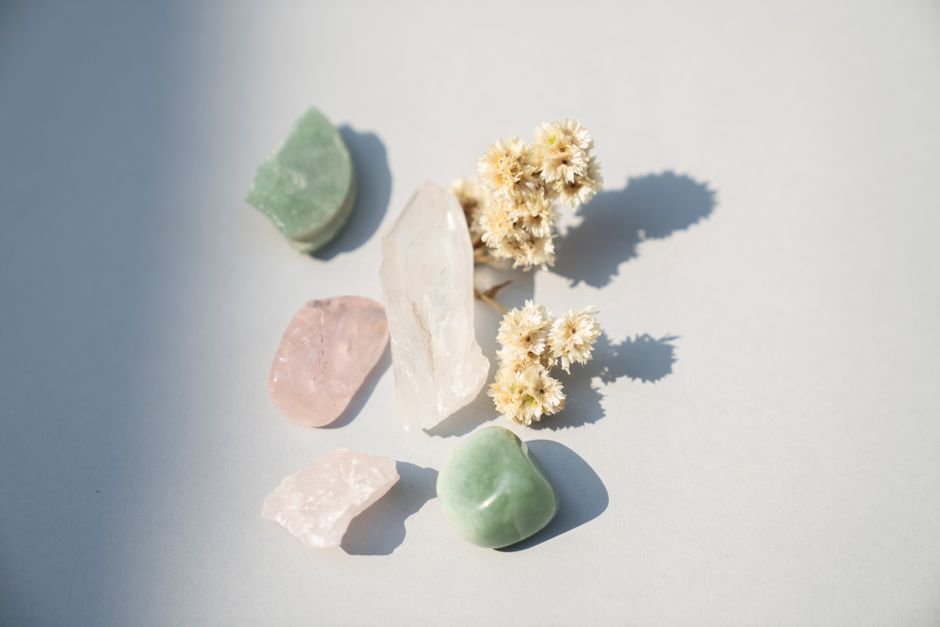
Glass buys you time, not safety. A stone behind a window fades more slowly than one on a patio, but a bright sill is still the single most common place people fade their amethyst. Laminated glass and modern low-E coatings block considerably more UV than plain float glass — but you rarely know which you have, and “considerably more” is not “all”. Treat a sunny window as a slow version of outdoors.
What to Cleanse and Charge Them With Instead
Can you cleanse crystals in the sun? For roughly half a typical collection, yes. For the rest, every one of these does the same ritual job with no UV involved.
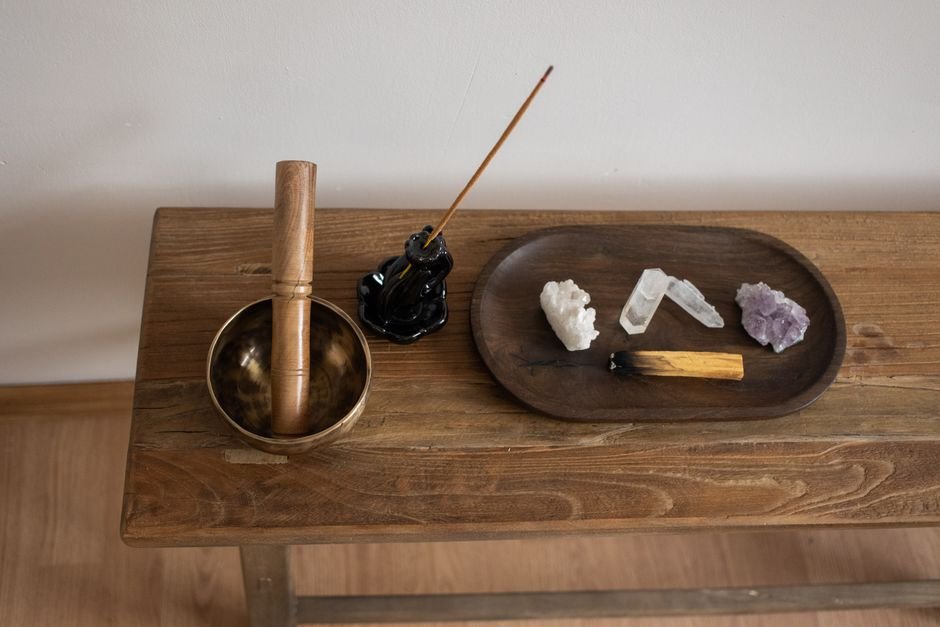
Moonlight is the direct substitute and it is genuinely safe: reflected sunlight at a minuscule fraction of the intensity, with no meaningful UV reaching the stone. Nothing fades in moonlight. Use it for amethyst, rose quartz, fluorite, celestite, kunzite and citrine.
A selenite plate works continuously, indoors, in the dark, and suits anything you want to leave charging for days. Keep the plate itself somewhere dry.
A clear quartz cluster does the same job and handles the wet-sensitive stones — pyrite, hematite, selenite, malachite — that you should not be soaking anyway.
Sound — a singing bowl, a bell, a tuning fork — touches the stone with nothing at all. It is the safest option for turquoise, opal, kunzite and anything porous or fragile.
If what you are chasing is a stone that feels flat rather than one that looks faded, that is a different question — how to recharge a crystal that feels dead and can crystals lose their power deal with that side, and signs you’re using your crystal wrong covers the care habits that quietly cause damage.
Spotting a Fade Before It’s Obvious
Fading is hard to see because you look at the stone every day. By the time it registers, a lot of colour has already gone. Four ways to catch it early:
Compare faces, not memories. Turn the stone over. The side that faced away from the window is your control sample, and a tumbled stone noticeably paler on one face has been fading for months.
Photograph it once, in consistent light. Same spot, same time of day, no flash. Take another in three months. The camera notices what your eye adapts to.
Watch the tips first. On amethyst points the colour is concentrated at the tip, and that is where thinning shows earliest — the tip goes grey-lilac while the body still reads purple.
Look for zoning contrast changing. Natural stones are colour-zoned and the zones fade at different rates. If the banding in a fluorite has become more contrasty than you remember, the pale zones are getting paler.
None of this is structural damage. A faded stone has the same composition, hardness and durability it always had — what it lost is colour, which is a cosmetic and often an emotional loss rather than a functional one.
Questions About Crystals and Sunlight
Is it ok to put crystals in the sun at all?
For agate, jasper, obsidian, hematite, tiger’s eye, moonstone and labradorite, yes — sunlight does nothing to them. For anything on the fast-fader list it is not, and there is no minimum dose that counts as safe, only doses small enough not to matter. If you are unsure what a stone is, keep it out of the sun.
How long do you cleanse crystals in the sun?
The common instruction is anything from twenty minutes to a full day, and for light-stable stones any of that is fine. For light-sensitive ones the answer is zero minutes, because brief repeated sessions accumulate exactly like one long one. Twenty minutes a week for two years is roughly a full day of direct sun, and a deep amethyst will show it.
Will a faded crystal go back to its original colour?
No. Not with cleansing, charging, moonlight, salt, water or storage — the change happened inside the crystal lattice, not on the surface. Colour centres can be recreated by industrial gamma irradiation, a real commercial process for quartz, but it needs a licensed facility and costs more than almost any specimen is worth.
Does sunlight fade crystal jewellery too?
Yes, more slowly, because jewellery spends much of its time on skin, in sleeves and in boxes rather than in windows. Amethyst, kunzite, topaz and apatite set in rings will pale over years of daytime wear. Storing pieces in a closed box between wears does most of the work.
Does moonlight fade anything?
No. Moonlight is sunlight reflected off a dark, dusty surface roughly 400,000 kilometres away, arriving at something like a millionth of the intensity, with effectively no usable UV left in it. It is the safe default for every stone in this article.
Why did my amethyst turn orange instead of pale?
That is heat, not light. Push amethyst past roughly 300–400°C and the iron rearranges into a form that reflects yellow-orange rather than violet — which is precisely how most commercial citrine is made. Household conditions rarely reach that, but a car dashboard or a radiator shelf can add a warm cast. Is heat-treated citrine worth buying explains how to tell treated material from natural.
Mineralogy in this guide is drawn from Amethyst — iron colour centres and light sensitivity (Wikipedia), Smoky quartz — aluminium colour centres and irradiation (Wikipedia), and Kunzite — Gemological Institute of America. Cleansing and charging practices are described as they are held within crystal healing communities.