Last Updated on August 19, 2026 by Umar Farooq
Short answer: light did it. Amethyst gets its purple from iron atoms that were rearranged into “colour centres” by millions of years of natural radiation underground. Ultraviolet light slowly puts them back the way they were, and the purple drains out — first to lilac, then to a milky grey-white, and eventually to something close to plain clear quartz. It is a real, measurable, physical process, it is permanent at home, and it happens far faster than most people expect.
If your stone sat on a bright windowsill, went out for a “sun charge,” or lived on a car dashboard, that is almost certainly your answer.
Below is what’s actually happening inside the stone, how to tell UV fading apart from the two things people confuse it with, whether any of it can be reversed, and what the change is commonly taken to mean.
What Actually Gives Amethyst Its Purple
Amethyst is quartz. Chemically it is the same silicon dioxide as the clear quartz point sitting next to it — the difference is a trace of iron and a very long history.
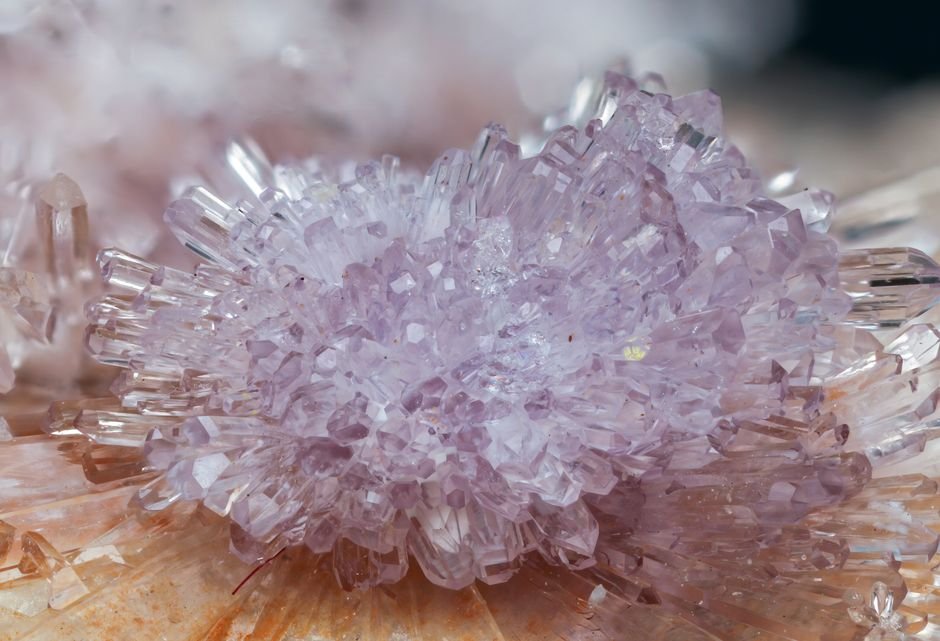
When amethyst forms, iron atoms sit inside the quartz lattice as impurities. On their own, they do almost nothing to the colour. What creates the purple is natural radiation from surrounding rock, acting on those iron atoms over geological time and knocking them into an unstable, higher-energy arrangement. Mineralogists call the result a colour centre. It absorbs certain wavelengths of light and reflects violet, and that is the purple you see.
The important part is that the arrangement is unstable. It took an enormous amount of time and energy to create, and it does not take much to undo. Ultraviolet light supplies exactly the kind of energy that resets those iron atoms to their ordinary state — and once they reset, the stone stops reflecting violet.
That is why a faded amethyst looks washed out rather than dirty. Nothing has been added to the surface. Something has been subtracted from the inside.
The Everyday Places Amethyst Loses Its Colour
Almost nobody fades an amethyst deliberately. It happens in ordinary places that don’t feel like hazards.
Windowsills. This is the single most common one. A windowsill feels like a display shelf, but it is the brightest UV environment in most homes, and a stone left there gets several hours of exposure every clear day. Ordinary window glass blocks most UVB but passes plenty of UVA, which is more than enough. Glass is not the protection people assume it is.
Sun charging. Here is the uncomfortable part: one of the most widely repeated pieces of crystal-care advice is the fastest way to destroy an amethyst. “Leave it out in the sun to recharge” is standard guidance in a lot of beginner material, and for amethyst, rose quartz, fluorite, citrine and kunzite it is straightforwardly damaging. If you have been sun-charging a collection for a while, amethyst is usually the first stone to show it.
Car dashboards. UV plus heat, concentrated, for hours. A stone kept in a car ages faster than one on a windowsill.
Outdoor grids and garden displays. Full-spectrum sunlight with no glass at all.
Shop and gallery lighting. Less common, but strong display lighting over months does contribute — which is occasionally why a piece looks paler at home than it did in the shop.
How Fast Does Amethyst Fade?
Faster than almost anyone expects. This is not a decades-long process.
In direct summer sun, visible lightening can begin within days to a few weeks. On a bright windowsill, a noticeable change over one to three months is typical. In a room with indirect daylight, it takes years and may never become obvious.
Two things vary the rate. The first is where the amethyst came from — iron content and the internal conditions of formation differ by locality, and some material is genuinely more light-stable than others. The second is how deep the colour was to begin with. A pale amethyst has less to lose before it reads as white; a deeply saturated specimen can lose a surprising amount before anyone notices.
Fading is also cumulative and one-directional. There is no recovery period. An hour on the windowsill every day adds up the same way a long single exposure does.
Turning Brown or Yellow Instead of White
If your amethyst has drifted toward brownish, yellowish or orange rather than pale, the cause is heat rather than light. If it has gone darker still, a crystal turning black has its own set of causes.
Heat affects the same iron, but differently. Take amethyst past roughly 300–400°C and the iron shifts into an arrangement that reflects yellow-orange instead of violet. This is not an obscure laboratory curiosity — it is an industry. The overwhelming majority of citrine sold today is heat-treated amethyst, which is why so much “citrine” has a distinctive white base fading up into a burnt orange tip. If you want the full picture on that, is heat-treated citrine worth buying covers how to tell treated material from natural.
Household heat rarely reaches those temperatures, so a domestic amethyst usually browns only slightly, and usually alongside UV fading rather than instead of it. But a stone left somewhere genuinely hot — a radiator shelf, a sunlit car, too close to a candle — can pick up a warm cast that no amount of cleansing removes.
Was It Ever Really Amethyst?
Before you conclude that light faded your stone, it is worth ruling out a different possibility: some of what is sold as amethyst is dyed quartz, and dyed quartz loses colour in a way that looks similar at a glance but is easy to distinguish up close.
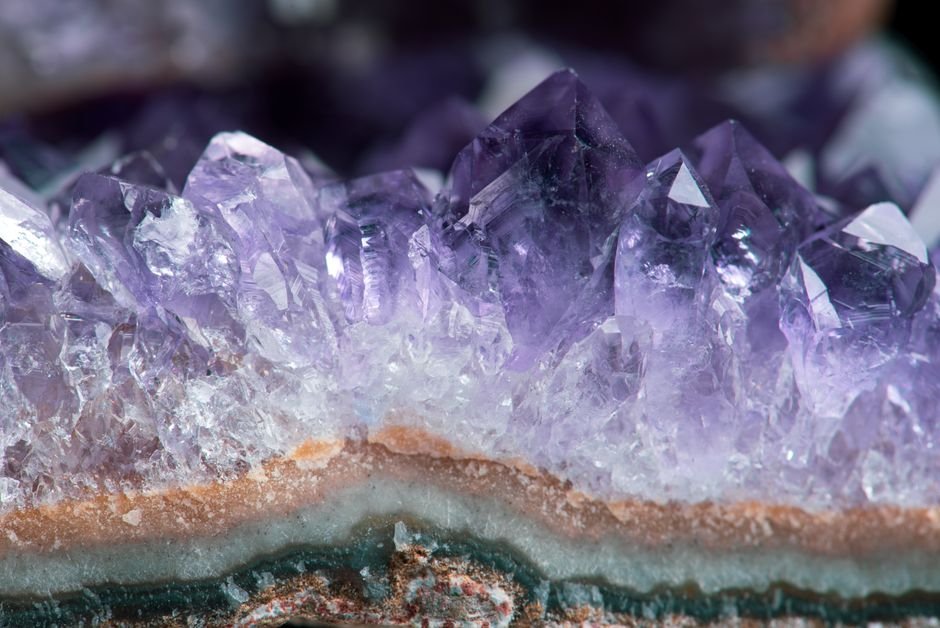
Natural amethyst fades unevenly, following its own internal structure. Real amethyst almost always has colour zoning — bands, patches and a paler base where the crystal began growing. When it fades, those zones fade at different rates, and the pattern stays recognisably geological.
Dyed quartz fades from the outside in. Dye sits in surface-reaching fractures and along the outer layer. As it degrades or washes out, colour concentrates in the cracks and thins over the smooth faces, which is the opposite of how a natural stone behaves. A damp white cotton swab rubbed firmly on an inconspicuous spot will sometimes pick up a faint purple trace from dyed material and nothing at all from natural amethyst.
Suspiciously even colour is a warning sign in the first place. Perfectly uniform, edge-to-edge purple with no zoning at all is unusual in natural amethyst at low prices. How to spot fake amethyst goes through the rest of the checks.
None of this makes a dyed stone worthless, and if you like the piece it is still the piece you liked. But it does change the answer to “why did this happen” — and it changes whether protecting it from light will help.
Can the Purple Come Back?
Not at home. There is no cleansing method, no soak, no charging routine and no storage trick that restores a faded amethyst. Anything promising otherwise is describing a stone that was dirty rather than faded.
The colour can be restored, but only by re-irradiating the stone — the same gamma exposure that created the colour centres in the first place, done industrially. This is a real commercial process used on quartz, but it needs a licensed irradiation facility, it costs more than most specimens are worth, and it is not something a home practitioner or an ordinary lapidary can arrange. For practical purposes, treat the change as permanent.
What you can still do is stop it going further. Fading halts the moment the UV exposure does. A stone that is halfway to white will stay exactly where it is if you move it somewhere dark today.
What Crystal Traditions Read Into a Whitening Amethyst
Plenty of people searching this question want the physical explanation and the interpretive one, so here is that side fairly.
Within crystal healing communities, a stone losing its colour is most often read one of three ways. The first is that the amethyst absorbed and transmuted a heavy load of energy on your behalf and the whitening is evidence of the work it did. The second is that the stone has completed what it was with you for, and the fading marks the end of that relationship rather than a fault. The third, tied to amethyst’s association with the crown chakra, reads the shift toward white or clear as a movement toward higher, less filtered spiritual clarity — a change of function rather than a loss.
These are interpretive frameworks, not mechanisms. There is no instrument that measures transmuted energy, and none of the three predicts which stones will fade or when. What they do offer is a way of making sense of an object you had a relationship with changing in front of you, which is a real thing to want.
Where the Two Explanations Meet
It is worth being precise about how the two answers relate, because they are not actually competing for the same job.
The physical explanation tells you when and why it happens: it predicts that the amethyst on the windowsill fades and the one in the drawer does not, that the sun-charged collection loses colour and the shelf-stored one keeps it, that fluorite and rose quartz go the same way and jasper does not. That predictive power is what makes it useful — it tells you what to do next.
The interpretive explanation addresses something the physical one has nothing to say about: what the change means to you, and whether to keep working with the stone. That is a genuine question and it doesn’t have a mineralogical answer.
You can hold both. What is worth avoiding is using the second to skip past the first — because if a stone is fading for a physical reason, the rest of your collection is sitting in the same conditions.
Keeping the Amethyst You Still Have
If one stone has faded, everything sharing its shelf is on the same path. This is the part that actually saves pieces.
Move light-sensitive stones off windowsills. Interior shelves, closed cabinets, drawers and boxes are all fine. Amethyst does not need light for anything.
Stop sun charging the vulnerable ones. Moonlight does the same ritual job with no UV at all, and a selenite plate or a quartz cluster works continuously without any light source. Sound cleansing touches the stone with nothing whatsoever.
Rotate display pieces. If you want a specimen out where you can see it, put it somewhere with indirect light and swap it with a stored piece every few months so no single stone takes all the exposure.
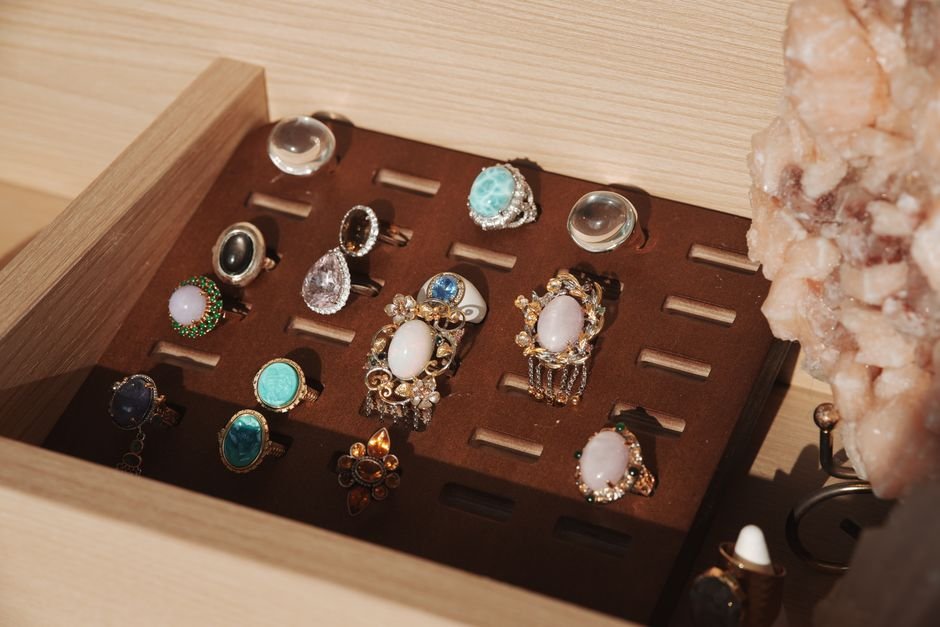
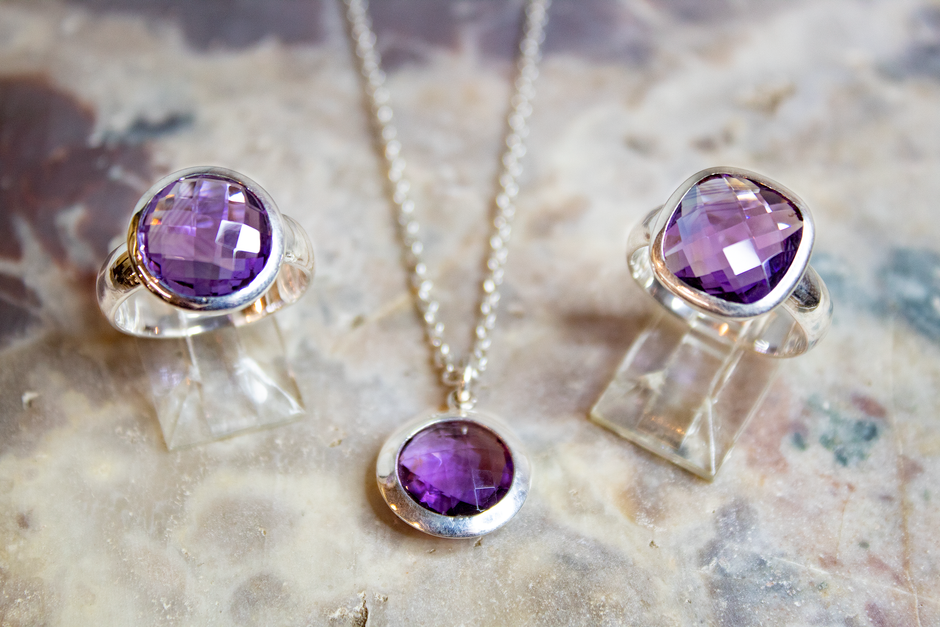
Store jewellery in a closed box. Amethyst rings and pendants fade too — they just do it more slowly because they spend time on skin rather than in windows.
Keep the light-safe stones separate in your head. Agate, jasper, obsidian, hematite and tiger’s eye are essentially unbothered by daylight. Amethyst, rose quartz, fluorite, citrine, kunzite, celestite and smoky quartz are not — the full stone-by-stone breakdown is in which crystals fade in sunlight. Once you know which shelf is which, the problem stops recurring.
If the whole collection has been feeling flat rather than looking faded, that is a different question — can crystals lose their power and how to recharge a crystal that feels dead deal with that side of it, and signs you’re using your crystal wrong covers the care habits that quietly cause damage.
Questions About Amethyst Turning White
Can a faded amethyst be recharged back to purple?
No. Charging, cleansing and moonlight do nothing for colour, because the change happened inside the crystal lattice rather than on its surface. The only route back is industrial re-irradiation, which is impractical for almost any specimen. What charging can do is stop nothing and cost nothing — the useful action is moving the stone out of the light.
Does a faded amethyst still work?
Within crystal healing traditions the answer is yes — the mineral is unchanged, and colour is not what practitioners locate a stone’s properties in. Physically it is still amethyst: same composition, same hardness, same iron content. Whether the change affects how you feel about the piece is a personal question, and it is a reasonable one either way.
How long can amethyst stay in the sun safely?
There is no genuinely safe duration, because the damage is cumulative rather than threshold-based. Short, occasional exposure — carrying it outside, a photograph in daylight — is not something to worry about. Repeated deliberate exposure is, and that includes brief daily sun-charging sessions.
Why is my amethyst turning white only in patches?
Because natural amethyst is colour-zoned, and the zones fade at different rates. Uneven fading is normal and is actually a mild point in favour of the stone being natural rather than dyed. It can also simply reflect which face was pointed at the window.
Is my amethyst ruined?
Physically it is intact — no crack, no structural damage, no safety issue. What it has lost is colour, which is a cosmetic and, for many people, an emotional loss rather than a functional one. It can still be used, displayed, worn and worked with exactly as before.
Does moonlight fade amethyst too?
No. Moonlight is reflected sunlight at a tiny fraction of the intensity, with effectively no meaningful UV reaching the stone. It is the standard safe substitute for every light-sensitive crystal, which is why it is the recommendation throughout this article.
Sources referenced for the mineralogy in this guide: Amethyst — iron colour centres, irradiation and light sensitivity (Wikipedia), Amethyst description — Gemological Institute of America, and Mohs hardness scale — U.S. National Park Service. Spiritual interpretations are presented as belief within crystal healing communities, not as established fact.