Last Updated on August 19, 2026 by Umar Farooq
Short answer: it almost certainly did experience impact — just not the kind you’d notice. “Without being dropped” doesn’t mean without contact. Chipping is usually caused by unnoticed handling stress: bumping against other stones in a bag or jewelry box, being jostled during transport, contact with a harder mineral, a pre-existing micro-fracture finally giving way, or a sudden temperature change. The chip feels mysterious because the moment of contact was too small or too gradual to register — but there was almost always a physical cause.
Below is a full breakdown of what’s actually happening, the hardness science behind why some stones chip more easily than others, what the crystal healing community says about unexplained chips, and exactly how to store your stones so it doesn’t happen again.
Why Crystals Chip Without an Obvious Drop
Four causes account for the vast majority of “mystery” chips:
- Bumping against other stones or objects. A crystal resting against another mineral, a zipper, keys, or coins in a bag can chip from ordinary movement — no dramatic fall required.
- Being jostled in a bag or pocket. Everyday walking, sitting, or travel creates constant small impacts that add up, especially for a stone carried loose rather than padded.
- Pre-existing internal weakness. Many crystals already contain microscopic fractures or inclusions from their natural formation. A minor bump in exactly the wrong spot can be enough to chip a stone that seemed flawless on the surface.
- Temperature changes. Rapid heating or cooling — a crystal left in a hot car, then brought into an air-conditioned room, for example — can create internal stress that releases as a small chip with no visible cause at all. (The same thermal-shock mechanism explains why crystals crack by themselves.)
The Science: Why Softer Stones Chip More Easily
This is the mechanism most guides skip entirely, and it’s the real answer to “why did this happen without me dropping it.” Mineral hardness is measured on the Mohs scale, and gem durability actually depends on three separate factors: hardness, toughness, and stability, not hardness alone, according to the Gemological Institute of America (GIA). Hardness refers to scratch resistance, while toughness refers to resistance to chipping and breaking under impact — a stone can be quite hard and still chip easily if it’s brittle.
In practice, this means a softer stone stored touching a harder one will gradually get scratched or chipped even from light, everyday contact — no drop needed. A rose quartz (Mohs 7) resting against a piece of quartz or amethyst points can chip simply from being jostled together in a bag, since even minor contact between stones of different hardness transfers enough force to damage the softer surface over time. This is precisely why jewelers store gemstones in separate compartments rather than loose together.
What the Spiritual View Says About Unexplained Chips
Within crystal healing communities, an unexplained chip is sometimes interpreted as the crystal absorbing a stressful moment on the owner’s behalf — taking on a small amount of tension or negative energy so you don’t have to. Some practitioners use the term “Empathic Warrior” for crystals with chips, cracks, or other damage, treating the imperfection as a sign of the stone’s service rather than a flaw.
This is a belief held within crystal communities, not a documented fact — there’s no way to verify an “absorbed” stressful moment the way you can verify a Mohs hardness difference between two stones in a bag. Both explanations (physical friction and symbolic absorption) can sit alongside each other without contradiction: the chip is physically caused by contact, and you’re free to layer personal meaning on top of that if it resonates with you.
Myths About Mystery Chipping
Two assumptions are worth correcting directly:
- Myth: chipping always has deep meaning. Most chips, especially on stones stored loose with others or carried in a bag, are simply the predictable result of hardness differences and everyday friction — not a spiritually significant event every time.
- Myth: only mishandled crystals chip. Careful owners lose chips too, since normal storage next to harder stones, ordinary transport, or a pre-existing internal flaw can all cause damage without any actual mishandling on your part.
How to Prevent Future Chipping (Troubleshooting Steps)
- Review your storage. Separate softer stones (rose quartz, selenite, calcite, fluorite) from harder ones (quartz points, amethyst clusters, citrine) rather than storing them touching each other in the same pouch or drawer.
- Check pockets and bags for friction. Keys, coins, and other hard objects sharing space with a crystal are a common, overlooked source of chipping — even without a fall.
- Pad transport. Wrap individual pieces in soft cloth or use compartmentalized cases when traveling, moving house, or carrying stones daily.
When a Chip Doesn’t Need an Explanation
Not every chip warrants a deep dive into causes. If a stone has simply seen years of regular handling, wear, and use, ordinary wear-and-tear is a perfectly sufficient explanation — the same way a well-used pocketknife or a favorite ring shows its age. You don’t need to identify a specific incident behind every small imperfection on a stone you’ve carried daily for a long time.
Is a Chip a Bad Sign?
No — not physically, and not universally within spiritual traditions either. A chip doesn’t reduce a mineral’s chemical composition or, according to most crystal practitioners, its intended properties. The main consideration is practical rather than symbolic: check whether the chip has left a sharp edge that could cut you, and handle or store the piece accordingly if so. (If the damage is a crack rather than a chip, see does a cracked crystal still work.)
Can I Still Wear a Chipped Ring?
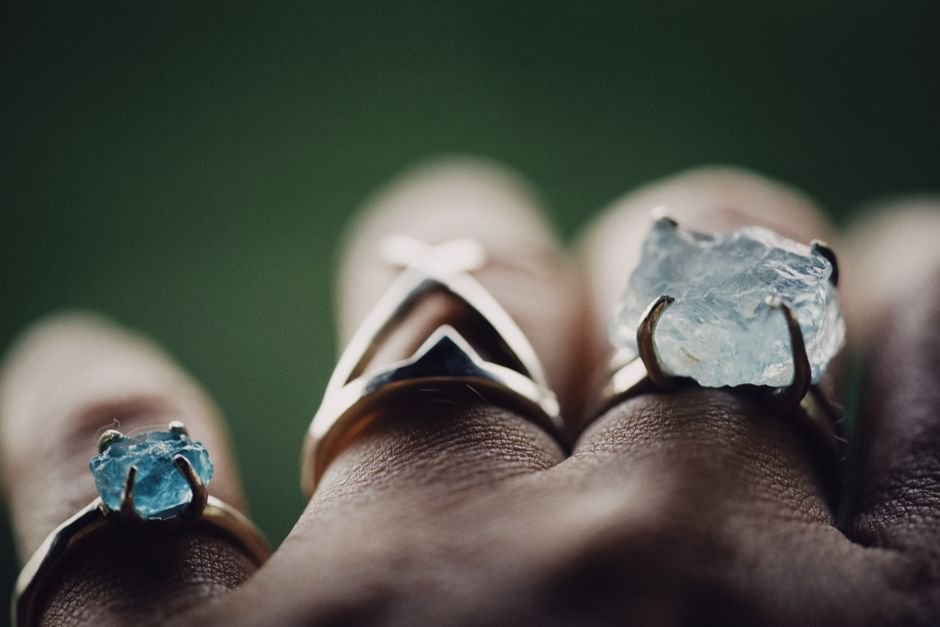
Yes, in most cases — with one caveat. If the chip is small, smooth, and doesn’t catch on fabric or skin, there’s no reason to stop wearing it. If the chip has created a sharp point (common with brittle stones like opal or emerald, which chip more easily than their hardness alone suggests, since opal in particular has poor cleavage and low toughness despite moderate hardness), have a jeweler smooth the edge or consider resetting the stone, since a sharp chip in a ring is more likely to snag or worsen with continued daily wear.
A Rose Quartz Chipped Inside Its Own Pouch
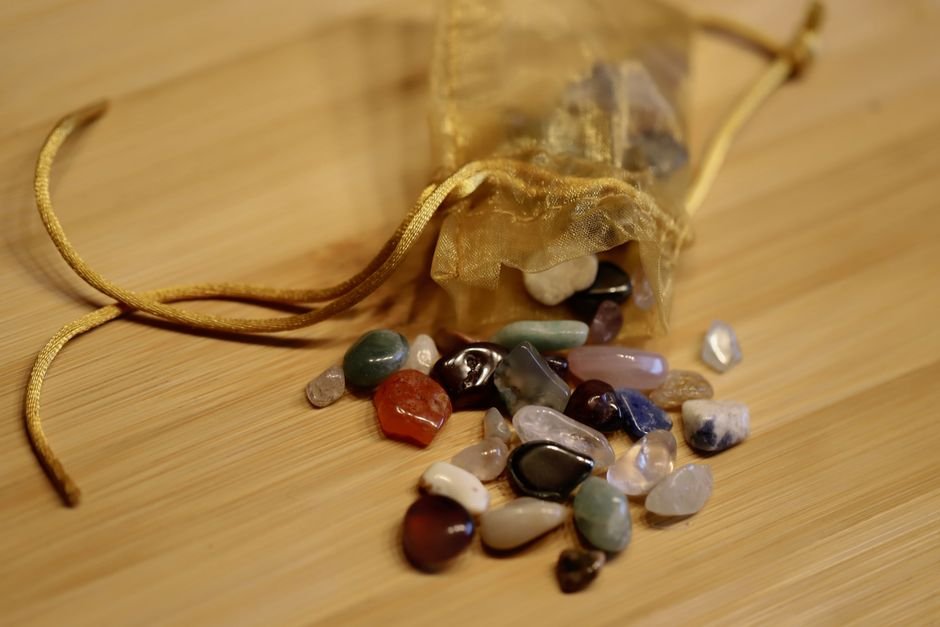
A rose quartz tumbled stone is stored loose in a fabric pouch alongside several raw quartz points. After a few weeks of being carried around in a bag, the rose quartz develops a small chip along one edge — not from any single drop, but from repeated light contact with the harder quartz points during ordinary movement. Once separated into individual small pouches, the rose quartz shows no further damage.
Protecting Your Stone From the Next Chip
- Store stones individually — wrapped in cloth or in separate compartments — rather than loose together, especially when hardness levels differ.
- Keep using a chipped stone if the edge is smooth and safe; there’s no requirement to retire it.
- Smooth or reset genuinely sharp chips, particularly on rings or jewelry worn daily, to prevent snagging or further damage.
Questions About Crystals Chipping
Is a chip a bad sign for my crystal?
No — physically, a chip doesn’t change the stone’s composition, and most crystal practitioners don’t treat chipping as inherently negative. The main thing to check is whether the chip has left a sharp edge that needs attention for safety.
Can I still wear a chipped ring?
Yes, as long as the chip is smooth and doesn’t catch on fabric or skin. If it’s created a sharp point, a jeweler can smooth the edge or reset the stone to prevent it from snagging or worsening with wear.
Why do softer crystals chip more easily than harder ones?
Softer minerals have less resistance to scratching and impact damage on the Mohs hardness scale, so they chip more readily from contact with harder stones, dust, or everyday objects — even without a dramatic fall.
How can I stop my crystals from chipping in storage?
Store stones individually in soft pouches or separate compartments, especially keeping softer minerals away from harder ones. This single change prevents the majority of unexplained chipping.
Does a chipped crystal still work the same way?
Practically and symbolically, yes — most crystal practitioners continue using chipped stones exactly as before. The chip affects appearance and, in some cases, safe handling, but not the stone’s underlying mineral identity or intended use. Even fully broken pieces remain usable.