Last Updated on August 19, 2026 by Umar Farooq
Turquoise is porous, and it absorbs whatever it spends time pressed against. Skin oils, sweat, hand cream, perfume and plain moisture soak in through a network of microscopic pores, and as they accumulate the blue drifts toward green. This is not dirt sitting on the surface, and it is not evidence your piece is fake. It is the most characteristic thing untreated turquoise does. Wear it against skin regularly and some degree of change is close to inevitable.
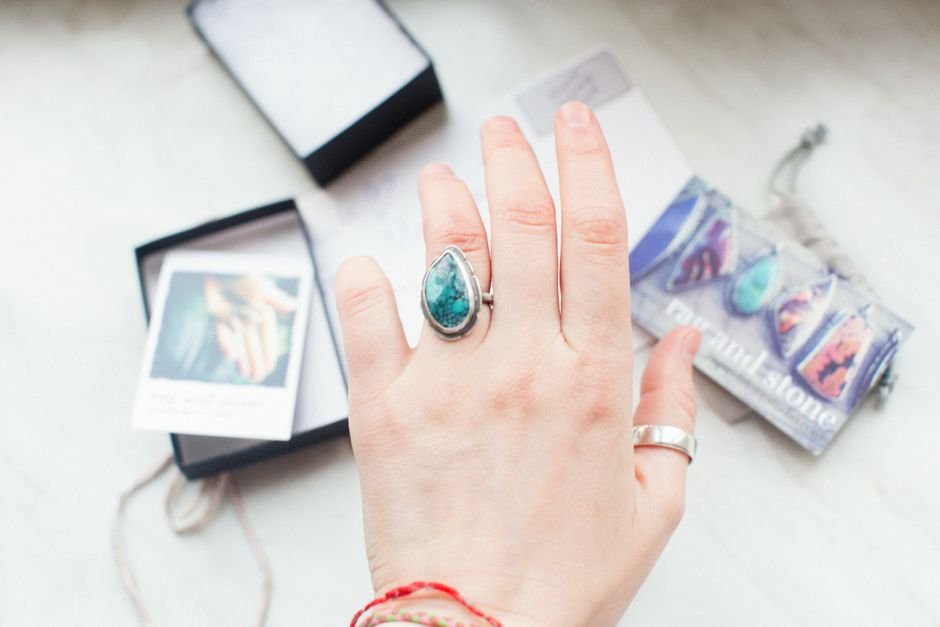
Two things decide how fast: how porous your particular stone is, and whether it was treated before it was sold.
Why Porosity Is the Whole Story
Turquoise is a hydrated copper aluminium phosphate, CuAl₆(PO₄)₄(OH)₈·4H₂O.
Unlike quartz, it almost never grows as a single clean crystal. It forms as a cryptocrystalline aggregate — countless microscopic crystals packed together with tiny voids between them. Those voids are the pores, and they run through the whole body of the stone rather than just its skin. They are why turquoise sits at only 5 to 6 on the Mohs scale, and why its specific gravity swings from about 2.6 to 2.9. Dense material is harder and less absorbent. Chalky, open material behaves like a sponge.
Three separate things push the colour green, and it helps to keep them apart.
The base hue was set when the stone formed. Copper (Cu²⁺) makes turquoise blue. Iron (Fe³⁺) substituting for aluminium makes it green. A 2021 study in Royal Society Open Science traced a tight correlation between iron content and the blue-to-green shift. That is why material from different mines is a different colour before anyone has worn it.
Absorbed material changes what you see. When oil replaces the air in those pores the stone darkens, because light is no longer scattering off millions of tiny air gaps. The oil also brings its own faint colour: skin oils, lotions and sunscreens all sit in the yellow-to-amber range, and yellow over blue reads as green. That is most of what you are looking at.
Losing water pushes it green too. The `·4H₂O` is structural water, part of the mineral. Persian turquoise is known to turn green when heated, through dehydration. Sun and dry heat do a slower version of the same thing.
Stabilised, Untreated, Reconstituted — or Not Turquoise at All
This determines whether your stone will keep changing or has already stopped.
Untreated turquoise has had nothing added. It is what collectors want, it keeps shifting for as long as you wear it, and it is a small fraction of what gets sold.
Stabilised turquoise is most of the market. Softer material is impregnated under pressure with epoxy, acrylic or water glass, filling the pores and hardening the stone enough to cut and set. It is still real turquoise — the mineral is unchanged — but the pores are occupied, so skin oils have nowhere to go. Stabilised turquoise does not green with wear. If yours has greened, it was untreated or only lightly treated.
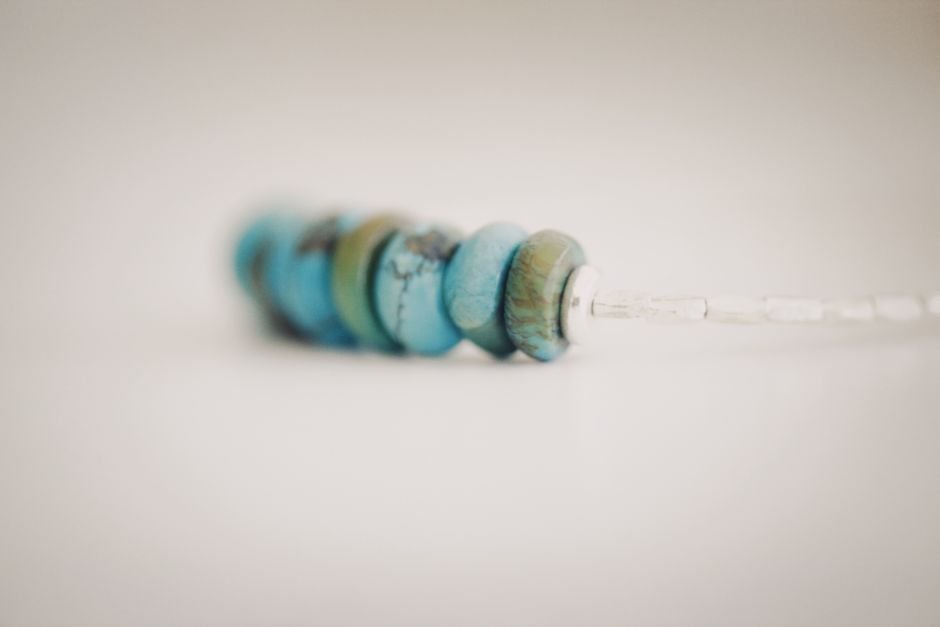
Reconstituted turquoise is powdered scrap bonded with resin and pressed into blocks — real turquoise as an ingredient, manufactured product as an object. The tell is uniformity: colour and matrix that look printed rather than grown, repeating bead to bead.
Dyed howlite is not turquoise at all, and it is everywhere. Howlite is a borate, Ca₂B₅SiO₉(OH)₅, naturally white with grey-black veins in an erratic web, and at Mohs 3.5 it is soft and porous enough to take dye beautifully. Dyed magnesite is used the same way. Neither greens — dyed material fades in sunlight or bleeds colour instead.
Telling them apart:
- The water drop. One drop on an untreated stone is pulled in within a second or two, darkening the spot until it evaporates. Stabilised and reconstituted material just holds the bead of water.
- A scratch on a hidden spot. Turquoise at Mohs 5–6 resists a steel pin. Howlite at 3.5 gives way easily.
- A cotton bud with acetone, on the back or inside a drill hole. Dye lifts onto the swab; real turquoise leaves nothing. Skip it if the piece might be waxed.
- The veining. Howlite’s grey-black web is thin, spidery and much the same everywhere. Turquoise matrix is host rock, and it varies in colour and width across one stone.
How to test a gemstone at home covers the hardness checks properly, and how to tell if a crystal is real applies the same thinking to other stones. Turquoise being faked at this scale is not unusual — why fake crystals are everywhere explains how it got that way.
The Everyday Things Turning Your Turquoise Green
Almost none of these feel like hazards, which is why they add up.
Skin oils and sweat are the dominant cause, and the reason rings and bracelets change faster than pendants. Sweat is salty and mildly acidic, and a ring worn daily meets thousands of hours of it a year. Hand cream and body lotion get applied straight over a ring and worked into the setting.
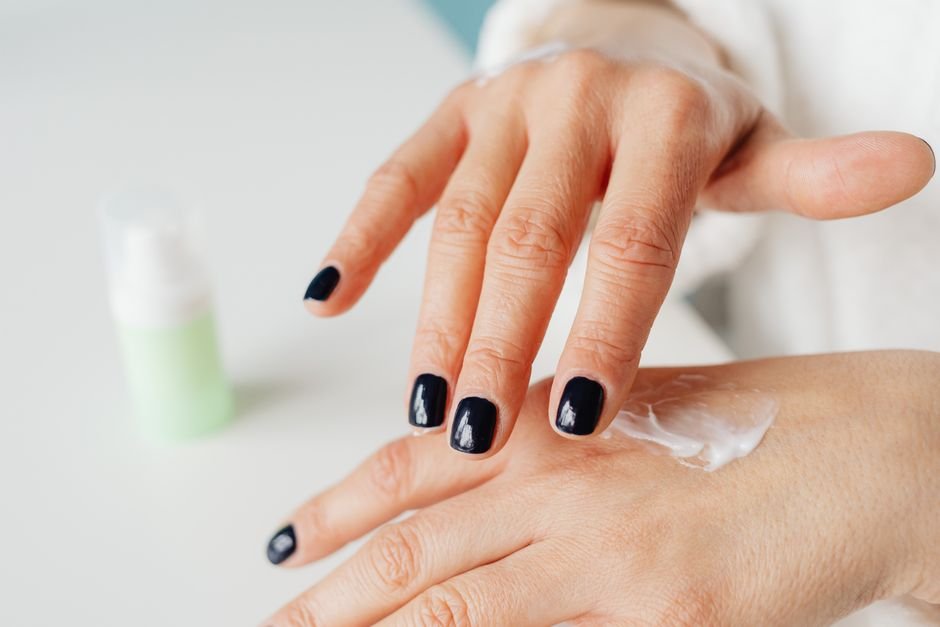
Perfume and hairspray are the worst of the group, because the solvents they carry can attack the finish and alter the colour outright rather than merely tinting it.
Sunscreen is oily, heavily formulated, and applied generously in exactly the weather you wear jewellery outdoors.
Bleach, degreasers and jewellery dips are more aggressive still. Silver dip is a particular trap: it cleans the setting and ruins the stone.
Sunlight and heat take water out rather than putting anything in. A windowsill, a car dashboard or a radiator shelf will dry a stone until it goes both greener and duller. Turquoise gets nothing from being “sun charged.”
If your piece is older and has developed a white surface film instead, that is traditional wax or oil migrating back out — same root cause, porous stone, different symptom.
Can You Get the Blue Back?
Realistically, no.
The change is through the stone rather than on it. What has been absorbed sits inside pores running through the body of the material, and no cleaning method reaches in and pulls it out. Wiping and polishing lift surface grime, which sometimes looks like a small improvement. The greening stays.
Things that make it worse: soaking, which carries surface residue deeper and can loosen the adhesive under a cabochon; bleach or vinegar, which attack the stone before they touch the discolouration; acetone, which strips wax and dulls a stabilising resin; and oiling it to bring the colour up, which deepens it briefly and then accelerates the problem, because you have just fed it more oil.
The only real option is mechanical: a lapidary grinding off the outer layer and re-polishing. On a thick cabochon that occasionally recovers a bluer face. On a thin one there is not enough material to lose, the oils usually go deeper than you can safely remove, and it costs more than the piece is worth.
What you can still control is everything else on the shelf — signs you’re using your crystal wrong covers the care habits that quietly do this kind of damage.
What Traditions Read Into a Turquoise That Changes Colour
Several traditions treat turquoise as a stone that records the person wearing it. In Himalayan and Tibetan practice it is described as living, its shift toward green read as reflecting the wearer’s health and years. Among Navajo and other Southwestern peoples the same responsiveness gave turquoise a role in gauging the wellbeing of the wearer. Persian tradition ran the other way on aesthetics — matrix-free sky blue was the ideal — but still read a changed stone as having absorbed something on the wearer’s behalf.
All of these describe a change that is genuinely real and genuinely tied to the wearer — unusual among gemstones, and a direct consequence of the porosity. The physical account is the one that predicts which stones change: the ring worn daily greens, the identical pendant in a drawer does not.
The Care Routine That Slows It Down
None of this stops the change permanently on an untreated stone. All of it buys years.
Last on, first off. The standard jewellery rule, and turquoise is the stone it was written for. On after perfume, moisturiser and sunscreen have dried; off before washing up, cleaning, gardening, the gym or the shower.
Wipe it after wearing. A soft dry cloth each evening lifts the day’s oil before it soaks in. This is the highest-value item on the list.
No ultrasonic cleaner, no steam, no soaking. Ultrasonic vibration works into the microfractures porous material is full of, and steam heat can dehydrate the stone and loosen the epoxy under a cabochon. Warm water, a trace of mild soap, a soft cloth, dried immediately — that is the safe limit.
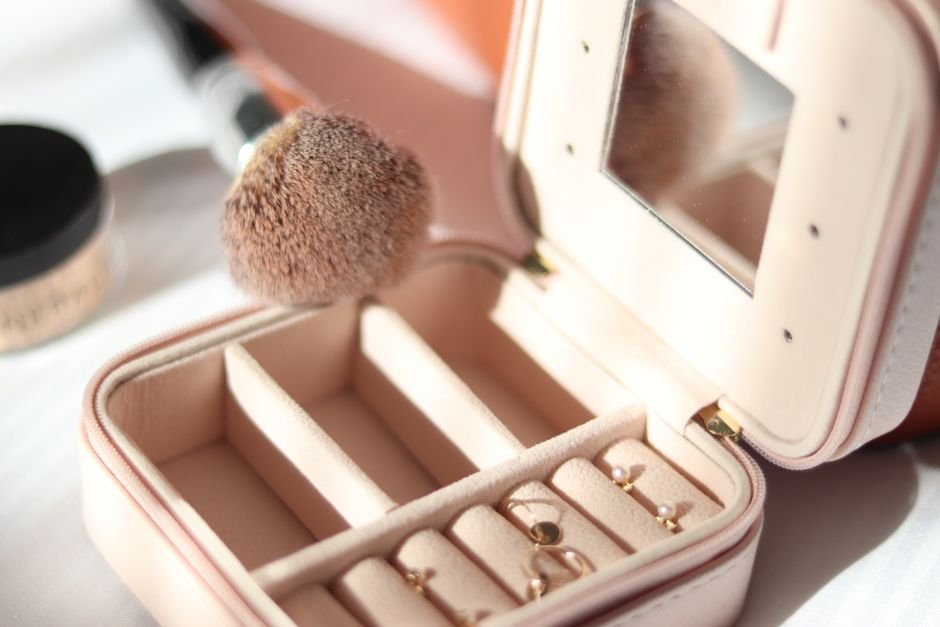
Store it dry, dark and separately. A pouch or lined compartment away from windowsills, radiators and bathrooms. Separately matters because at Mohs 5–6 turquoise is scratched by quartz, topaz and most gems it shares a box with.
Turquoise Is a Copper Mineral, and That Puts It in Risky Company
The copper that makes turquoise blue puts it in a family with the same weaknesses.
Malachite, Cu₂(CO₃)(OH)₂, is Mohs 3.5–4 and a carbonate — it reacts to acids and should never be soaked. Azurite, Cu₃(CO₃)₂(OH)₂, is the least stable of the group: it naturally alters into malachite over long timescales, which is why old specimens have green rims. Chrysocolla, a hydrated copper silicate, is often only Mohs 2–4 and extremely porous, so it is usually sold stabilised or intergrown with quartz.
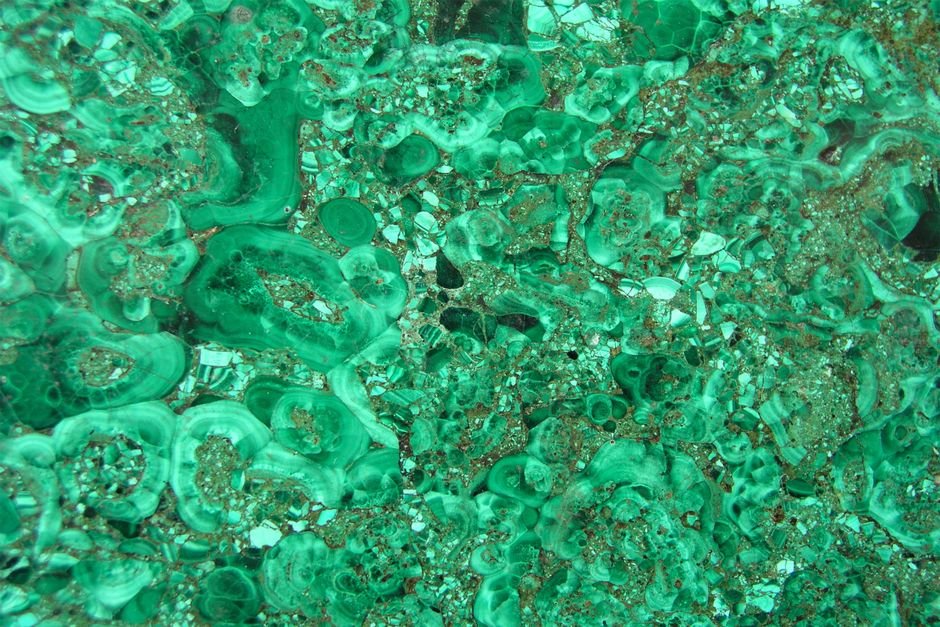
All four are soft, all four dislike water, heat and acids, and none belong in an ultrasonic cleaner. Powdered copper carbonates are toxic, so malachite and azurite should never go into a drinking elixir. If you are shopping for any of them, where to buy genuine crystals covers the seller signals to check first.
Questions About Turquoise Turning Green
Is my turquoise fake if it is turning green?
Close to the opposite. Dyed howlite fades or bleeds rather than greening, and stabilised turquoise has its pores sealed already. A stone that has slowly gone green with wear is behaving the way untreated natural turquoise behaves. That is not a guarantee, but it is a point in its favour.
How long does it take turquoise to turn green?
It depends on the porosity of your stone and how much skin contact it gets. A soft, chalky, untreated ring stone worn daily can shift noticeably within a year; a dense, high-grade piece worn occasionally may take a decade. Pendants and earrings change far more slowly than rings and bracelets, because less of them touches skin.
Does stabilised turquoise ever change colour?
Rarely, and not by the same route. The impregnating resin can yellow slightly after years of UV exposure, which warms the apparent colour, and strong heat can damage the treatment. But it does not absorb skin oils, so the slow blue-to-green wear shift does not happen to it.
Is green turquoise worth less than blue?
On average, yes — evenly saturated sky blue commands the highest trade prices. It is not a simple rule, though. Green material from specific mines is collected on its own merits, and in Southwestern and Tibetan work a strong green is a recognised style, not a fault.
Sources referenced for the mineralogy in this guide: Turquoise — composition, porosity, treatments and imitations (Wikipedia), “The impact of trace metal cations and absorbed water on colour transition of turquoise”, Royal Society Open Science, 2021, and the GIA turquoise care and cleaning guide. Cultural interpretations are presented as belief and tradition, not as established fact.