Last Updated on August 19, 2026 by Umar Farooq
A crystal goes cloudy for one of five reasons, and only three of them can be undone. The reversible ones are surface micro-scratching from storage and handling, mineral scale left by hard water and soap, and ordinary grime a proper clean lifts off. The two that can’t be undone are internal veils that were always inside the stone, and real dissolution in soft minerals like selenite, calcite and halite. One of the five isn’t damage at all: a wax or oil coating stripped off by cleansing, leaving the stone’s duller true surface showing.
Which one you have is usually decidable in about ninety seconds, with a damp cloth and a window.
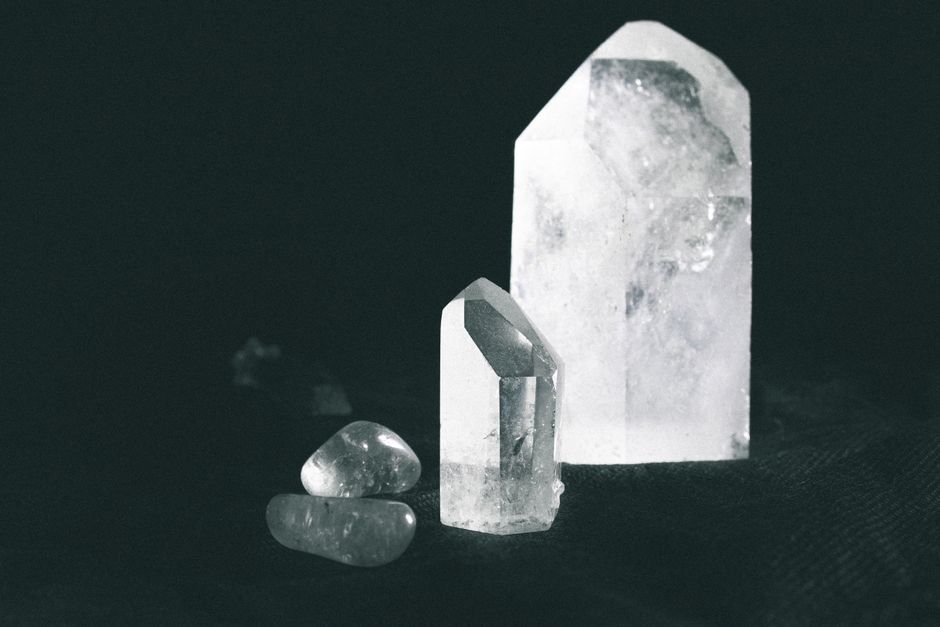
The five run from most common to least, and most fixable to least.
Cause 1 — Micro-Scratching From Storage and Handling
The most common reason a once-glassy crystal now looks foggy, and it sits entirely on the surface.
Household dust is not soft. A good fraction of it is fine quartz, the same mineral as clear quartz and amethyst, hardness 7 on the Mohs scale. Wipe a dusty stone with a dry cloth and you are dragging abrasive grit across a polished face. A few hundred passes over two years turn a mirror-flat polish into a field of scratches too fine to see individually. Light scatters off them instead of reflecting cleanly, and that scatter reads as haze.
It happens faster in a pouch or bowl where stones sit loose, grinding together whenever you move them. The harder stone wins — a quartz point dulls calcite or fluorite fast. Bracelets and pocket stones age quickest, adding skin oil and keys.
The giveaway: the cloudiness is outside only. Held to a light, the interior is still clear; it’s the skin of the stone that has gone matt. The same mechanism sits behind chips that appear without the stone ever being dropped.
Reversible: yes. Polishing takes the surface down below the scratches.
Cause 2 — Hard-Water Scale and Soap Film
Rinse crystals under the tap, or leave them soaking in a bowl to cleanse, and the water does more than get them wet.
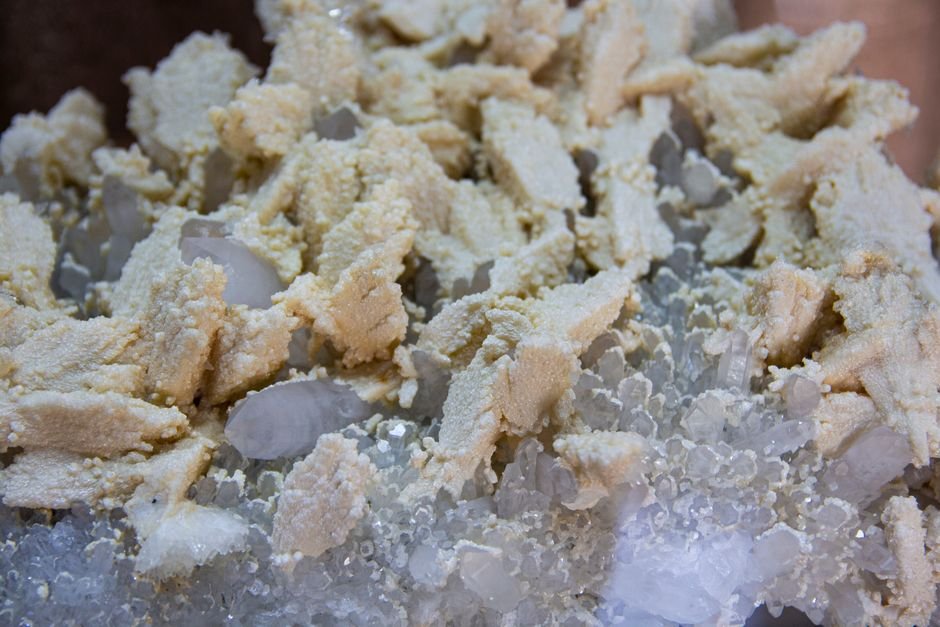
Hard tap water carries dissolved calcium and magnesium. As it evaporates, those minerals stay behind as a thin white crust — the same limescale that builds up in a kettle. On a polished face it looks like a milky bloom; in carved grooves, drill holes and between druzy points it turns solidly opaque. Soap makes it worse, leaving a fatty film for scale to bind to.
This is the cloudiness most often mistaken for permanent damage, and the easiest of the five to fix. Its look is distinctive: patchy, edge-heavy, often with a tide line where a droplet dried.
Reversible: yes, and usually in full.
Cause 3 — Veils and Fractures That Were Always Inside the Stone
This is the one that catches most people out, because it feels like something you did.
Quartz almost never grows perfectly clear. As a crystal forms it fractures and re-heals, and each healed fracture traps a sheet of microscopic fluid and gas bubbles along the old break. Gemologists call these veils, or fingerprints. They look like a wisp of smoke, a frosted pane, or a fine crack that catches the light from one angle and vanishes from another. Milky quartz is the same thing at a finer scale — countless sub-microscopic water-filled cavities scattering light throughout the stone.
None of it is damage. It formed underground over geological time, long before anyone dug the stone up — what changed is that you started noticing it, usually after holding the piece up to a bright light.
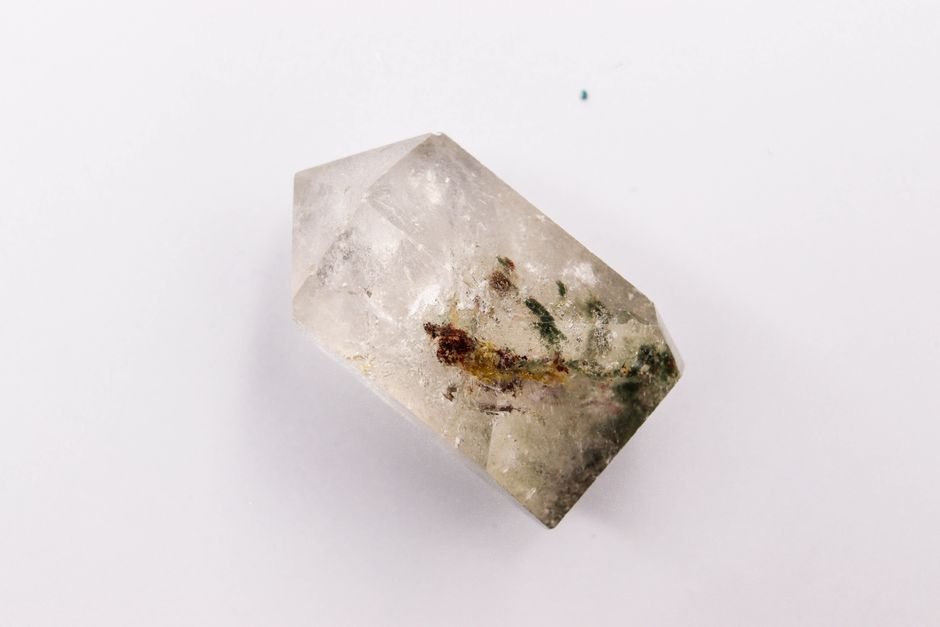
A genuinely new fracture looks different: it appears suddenly, after a knock or a temperature swing, with a sharp reflective plane rather than a soft feathery edge. If that’s what you’re seeing, read whether a cracked crystal still works.
Reversible: no. Nothing applied to the outside reaches an inclusion millimetres down. Any product claiming otherwise is selling a surface polish.
Cause 4 — A Wax or Oil Coating That Cleansing Stripped Off
Plenty of tumbled stones leave the workshop with help. Wax, mineral oil and clear resin deepen colour, fill surface pits and add gloss — standard on turquoise, malachite, howlite, dyed agate and cheap tumbled mixes.
That coating isn’t permanent. Hot water softens it, salt burial abrades it, smoke cleansing and handling wear it off, alcohol and detergent dissolve it. When it goes, the stone underneath looks flat, chalky and paler than you remember, often within one cleansing session — which is why it feels so dramatic.
Nothing has been harmed; you’re seeing the stone as it actually is. The signals that reveal a coating are the same ones used to tell a real crystal from a fake.
Reversible: not meaningfully. You can re-wax or re-oil it, but that’s a cosmetic layer, not the stone.
Cause 5 — The Stone Is Dissolving
Some minerals should never have met water. A chalky, softened, faintly furry surface is what happens when they do.
Selenite is gypsum — calcium sulfate dihydrate, CaSO₄·2H₂O — hardness 2, soft enough to mark with a fingernail, and genuinely soluble in water. A wand left in a cleansing bowl comes out with its glassy fibres etched to matt white, and degrades further with every rinse.
Calcite is calcium carbonate, hardness 3, and dissolves readily in anything acidic — vinegar, lemon juice, even rainwater, which carries dissolved carbon dioxide. Halite is rock salt, and dissolves at a rate you can watch.
Reversible: no. Material that has dissolved is gone, and polishing removes more of it.
Work Out Which One You Have: A Four-Step Check
Run these in order and stop as soon as one gives a clear answer.
1. Does it wipe off? Breathe on the cloudy area to fog it, wipe firmly with a damp microfibre cloth, dry immediately. If the haze lifts at all, you have deposits or grime — Cause 2.
2. Is it under the surface? Hold the stone with a bright window behind it and rotate it slowly. Surface cloudiness shifts as you tilt; internal cloudiness stays anchored in one place at every angle. That’s Cause 3.
3. Does it feel softer than it should? Press a fingernail into an inconspicuous spot. A fingernail is about hardness 2.5, so if it marks, you have a soft mineral and Cause 5 is live. If a steel pin marks it easily but a fingernail doesn’t, you’re near hardness 3 — calcite territory. Full method in how to test a gemstone at home.
4. Uniform or patchy? Even haze across every polished face points to micro-scratching or a stripped coating. Patchy haze with hard edges, tide lines or build-up in crevices means water deposits. A cloudy region with a definite boundary that nothing on the surface changes is internal.
This doesn’t cover a stone that lost colour rather than clarity. Washed-out amethyst is light destroying the colour centres, covered in why amethyst turns white.
Can a Cloudy Crystal Be Restored? By Cause and by Hardness
Yes, for two of the five causes — and the answer depends as much on hardness as on cause.
Start with the uncomfortable part: most “restore your cloudy crystal” advice is describing a stone that was merely dirty. Warm water, dish soap, a soft toothbrush and a buff give a dramatic before-and-after on a grimy stone, which is why it makes such good content. It does nothing for scratches, inclusions or dissolution. If a method takes five minutes and no abrasive, it’s cleaning, not restoring.
Scale and film. Soak in distilled white vinegar for ten to thirty minutes, work the crevices with a soft toothbrush, rinse in distilled water rather than tap, and dry with a lint-free cloth straight away — distilled water leaves nothing behind as it evaporates, which is the point. Never use vinegar on calcite, selenite, malachite, turquoise, pearl or anything below hardness 5; the acid attacks the stone. For those, distilled water and a dry cloth only.
Scratched quartz (Mohs 7). This is where home polishing genuinely works, because quartz is hard enough to take real abrasion without losing its shape. Progressively finer wet-and-dry papers — roughly 800, 1500, then 3000 grit, kept wet — then cerium oxide on a felt pad restores a mirror finish on a flat or gently curved face. Budget an hour for a palm-sized piece. On a terminated point, don’t: hand-polishing rounds the facet junctions, and a rounded point looks worse than a hazy one.
Scratched soft stones (Mohs 3–4). Calcite, fluorite and malachite can be polished, but the margin for error is near zero. Grit that takes an hour on quartz eats visible material off calcite in seconds, and uneven pressure leaves a wavy surface that reads as worse than the haze you started with. Hand this one over.
Professional re-polishing. A lapidary will re-polish a tumbled stone or flat cabochon for roughly $20 to $50, more for carvings, spheres and faceted work. That price is the real decision point: for an $8 tumbled amethyst it makes no sense; for a large sphere or an heirloom carving it’s money well spent.
Where to stop. Don’t polish internal cloudiness — you’ll remove material and change nothing visible. Don’t polish a dissolving mineral. Don’t polish a coated stone hoping for a better surface underneath; there usually isn’t one. And leave raw specimens and natural crystal faces alone: they grew that way, and sanding them destroys something shine won’t replace.
Keeping It From Clouding Again
Store pieces so they aren’t touching. Soft individual pouches, a compartmented box or a lined drawer all work; a bowl of loose tumbles is the fastest route back to a dull surface.
Dust with a soft brush or a damp cloth rather than a dry one — damp lifts grit instead of dragging it. Clean with distilled water and dry immediately. Keep soft minerals out of water entirely; smoke, sound, moonlight and intention leave a stone physically untouched.
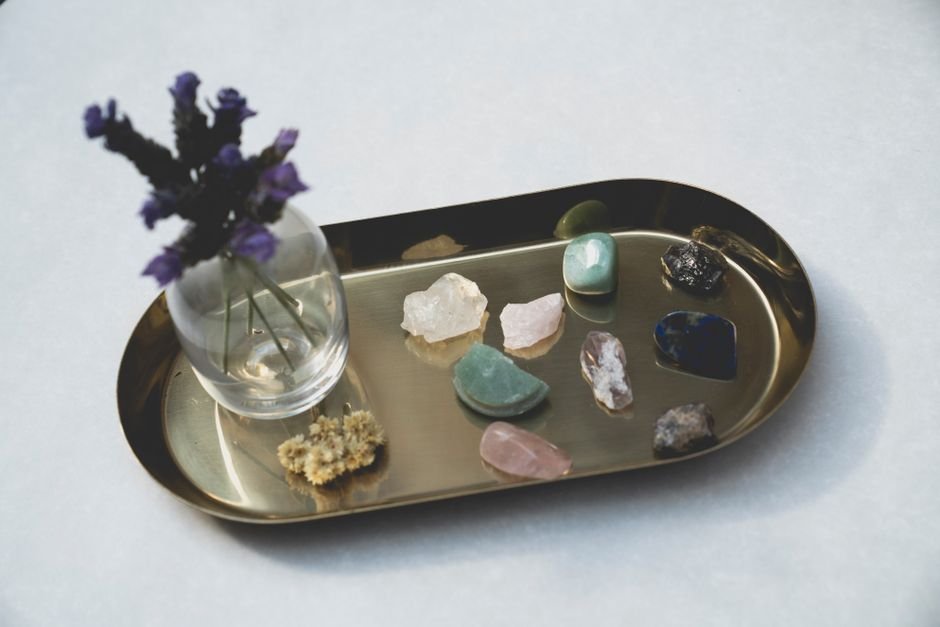
And take bracelets off for washing up and showering.
Questions About Cloudy Crystals
Does a cloudy crystal still work?
In crystal healing, clouding is usually read as a stone having taken on or held something rather than as a loss of function, and a cloudy piece isn’t considered spent. Hold that alongside the physical picture: one clouded by scale was dirty, one clouded by veils was always that way. If a piece feels different to work with, the ways to recharge a crystal that feels dead apply here too.
My crystal turned cloudy overnight — what happened?
Overnight is almost always water. A stone that went into a cleansing bowl, a salt bath or a rinse and came out foggy has either dried with scale on it, which wipes off, or lost a wax coating, which doesn’t come back but isn’t damage. Micro-scratching takes months, never one night.
Why is my crystal cloudy in only one spot?
A single cloudy patch with a defined edge is nearly always internal — a veil or healed fracture just below the surface. Rotate the stone in front of a light: if the patch stays anchored as you turn it, no surface treatment will reach it.
Will an ultrasonic cleaner clear a cloudy crystal?
Only if the cloudiness is dirt, and it carries real risk. Ultrasonic cavitation drives water into every existing fracture and can propagate a veil into a full crack. Never put selenite, calcite, malachite, turquoise, opal or any visibly fractured stone into one.